In this article:
Can Graves Disease During Pregnancy Affect Your Baby?
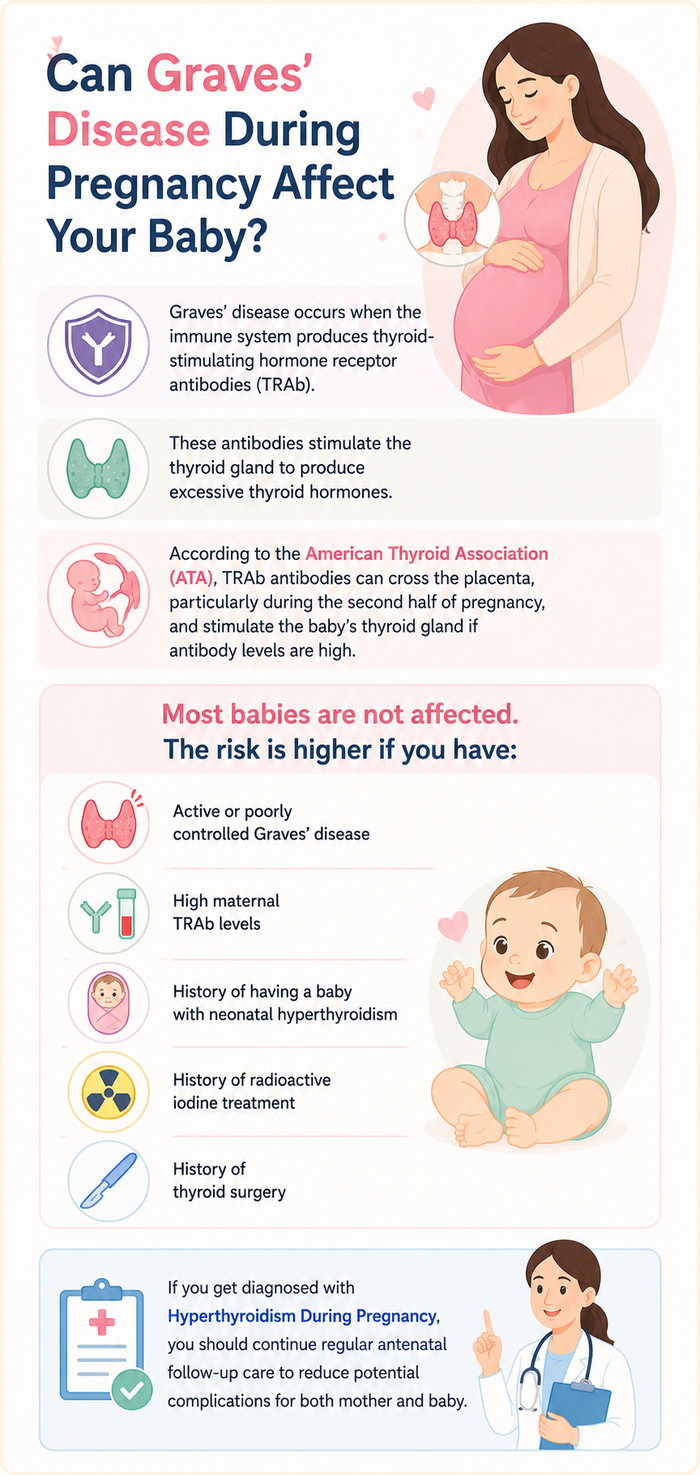
Graves' disease occurs when the immune system produces thyroid-stimulating hormone receptor antibodies (TRAb). These antibodies stimulate the thyroid gland to produce excessive thyroid hormones.According to the American Thyroid Association (ATA), TRAb antibodies can cross the placenta, particularly during the second half of pregnancy, and stimulate the baby's thyroid gland if antibody levels are high.
Most babies are not affected. The risk is higher if you have:
- Active or poorly controlled Graves' disease
- High maternal TRAb levels
- History of having a baby with neonatal hyperthyroidism
- History of radioactive iodine treatment
- History of thyroid surgery
What Thyroid Problems Can Newborns Develop?
Your baby may develop the following conditions:- Neonatal hyperthyroidism (most common)
- Temporary hypothyroidism (less common)
As antibodies gradually disappear from the baby's bloodstream, thyroid function starts returning to normal.
What Symptoms Should Parents Watch For?
Symptoms depend on whether the baby's thyroid is overactive or underactive.Signs of neonatal hyperthyroidism include:
- Rapid heartbeat
- Poor weight gain despite feeding
- Irritability or excessive crying
- Difficulty sleeping
- Feeding difficulties
- Excessive sweating
- Enlarged thyroid gland (goitre)
- Excessive sleepiness
- Poor feeding
- Constipation
- Low muscle tone
- Prolonged jaundice
- Slow weight gain
How Are Thyroid Problems Diagnosed?
Doctors begin by- Reviewing your pregnancy history
- Thyroid function
- TRAb antibody levels
If your baby is considered at higher risk, doctors may perform the following:
- Thyroid-stimulating hormone (TSH) testing
- Free thyroxine (Free T4) testing
- TRAb testing, when appropriate
- A detailed physical examination
How Are Neonatal Thyroid Problems Treated?
Treatment depends on the type and severity of the thyroid disorder. Babies with temporary hypothyroidism may require short-term thyroid hormone replacement until their thyroid gland functions normally again.According to the European Thyroid Association and the American Thyroid Association (ATA), most neonatal thyroid disorders caused by maternal antibodies resolve within a few months as the antibodies naturally disappear from the baby's circulation.
Can the Risk Be Reduced?
Such risk cannot always be prevented. However, careful pregnancy care greatly reduces complications.The following precautions can help:
- Regular thyroid function tests throughout pregnancy
- TRAb antibody testing during the second half of pregnancy
- Appropriate adjustment of antithyroid medication
- Fetal growth and heart-rate monitoring when indicated
- Early newborn assessment after delivery
Early diagnosis, timely care, and careful monitoring during pregnancy and after birth help identify whether your baby needs care. Most thyroid function in most babies improves as maternal antibodies gradually disappear.
Whether you’re pregnant, a new mom, or navigating postpartum, you don’t have to do it alone. Join our support group to connect, share, and support one another.
FAQs on Maternal Graves' Disease and Thyroid Problems in Newborns
- Does every mother with Graves' disease have a baby with thyroid problems?
No. Most babies are born healthy, particularly when maternal thyroid hormone levels are well controlled throughout pregnancy. - Can Graves' disease be treated safely during pregnancy?
Yes. Regular monitoring and appropriate treatment help protect both maternal and foetal health while reducing the risk of neonatal thyroid problems. - Can I breastfeed if I have Graves' disease?
In many cases, yes. According to the American Thyroid Association, breastfeeding is generally compatible with recommended doses of certain antithyroid medicines. Your healthcare provider can advise you on the safest treatment plan.