

Dr Vandana Jain, Principal Consultant, Obstetrics, Gynaecology, Infertility & Advanced Laparoscopic Surgery, Yashoda Medicity, shares her clinical perspective on the condition.
What Is Turner Syndrome?
Turner syndrome is a genetic condition that affects females. It occurs in about 1 in 2,000 to 2,500 female births. It is linked to short stature, early loss of ovarian function, and, in some girls, heart or kidney differences.The condition can occur in different forms:
- Complete monosomy X: One X chromosome is missing from all or nearly all cells (45, X).
- Mosaic Turner syndrome: Some cells have the usual two X chromosomes, while others have only one X chromosome.
- Structural abnormalities: One X chromosome may be partially missing or rearranged.
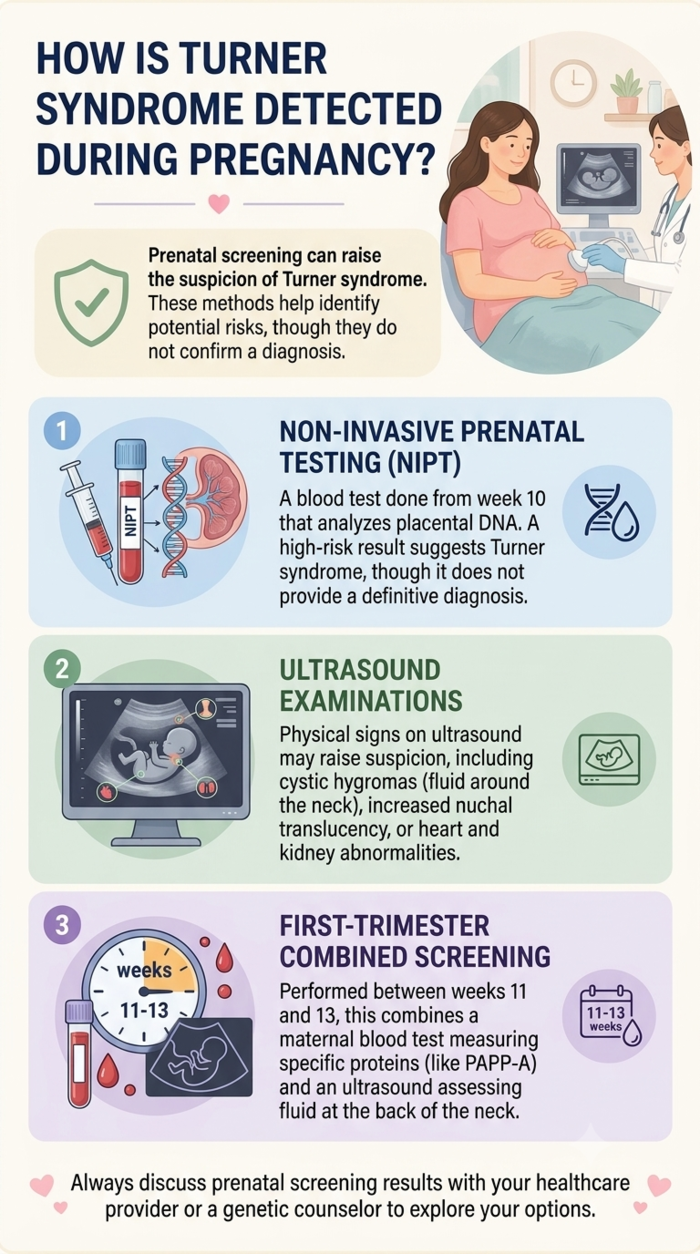
How Is Turner Syndrome Detected During Pregnancy?
Doctors may suspect Turner syndrome through the following prenatal screening methods.- Non-Invasive Prenatal Testing (NIPT)
A high-risk result suggests that the pregnancy may be affected by Turner syndrome, but it does not confirm the diagnosis. False-positive results can occur because the abnormal chromosome pattern may originate from the placenta or, occasionally, the mother rather than the baby.
- Ultrasound Examinations
- Cystic hygroma: Fluid-filled spaces, usually around the baby's neck, caused by abnormal lymphatic development.
- Increased nuchal translucency: An increased fluid-filled space at the back of the baby's neck during the first trimester.
- Foetal hydrops: Abnormal fluid accumulation in two or more areas of the baby's body.
- Heart abnormalities: Certain congenital heart defects, including coarctation of the aorta.
- Kidney abnormalities: Structural differences in the development of the kidneys.
- First-Trimester Combined Screening
The blood test measures pregnancy-associated plasma protein A (PAPP-A) and free beta-human chorionic gonadotropin (free beta-hCG). The ultrasound measures nuchal translucency.
Low PAPP-A levels and increased nuchal translucency may raise suspicion of a chromosomal abnormality, including Turner syndrome.
For the parents, knowing about a condition early on can help them to come to terms with it, as well as allowing them to receive adequate counselling and to prepare for pregnancy surveillance and postnatal care.
Which Tests Confirm Turner Syndrome Before Birth?
If screening results or ultrasound findings suggest Turner syndrome, doctors may recommend diagnostic genetic testing.- Chorionic Villus Sampling (CVS)
Under ultrasound guidance, providers use a thin needle or catheter to collect a small sample of placental tissue, which is examined to identify chromosomal abnormalities, including missing or altered X chromosomes.
- Amniocentesis
A karyotype test examines the number and structure of a baby’s chromosomes and confirms Turner syndrome.
What Happens After a Prenatal Diagnosis?
A confirmed diagnosis leads to additional scans, including a foetal echocardiogram and a kidney check. Most pregnancies with Turner syndrome end in miscarriage, but girls who are born often have normal intelligence and a good outlook with regular care.After birth, care may include:
- Growth hormone treatment in childhood to improve height
- Oestrogen therapy in adolescence to support puberty
- Regular heart, kidney, hearing and thyroid checks
- Fertility counselling in adulthood
FAQs on Can Turner Syndrome Be Detected Before Birth?
- At what week can Turner syndrome be detected in pregnancy?
Warning signs can appear on a scan at 11–14 weeks. NIPT can be done from about 10 weeks. CVS (from 11 weeks) or amniocentesis (from about 15 weeks) can confirm it. - Can a normal ultrasound rule out Turner syndrome?
No. Many girls, especially those with mosaic Turner syndrome, have normal scans. Only a chromosome test can confirm the diagnosis. - Can Turner syndrome be diagnosed after birth?
Yes. A karyotype test can confirm Turner syndrome after birth, even if prenatal screening did not identify it.