In this article:
What Causes a Twin Pregnancy?
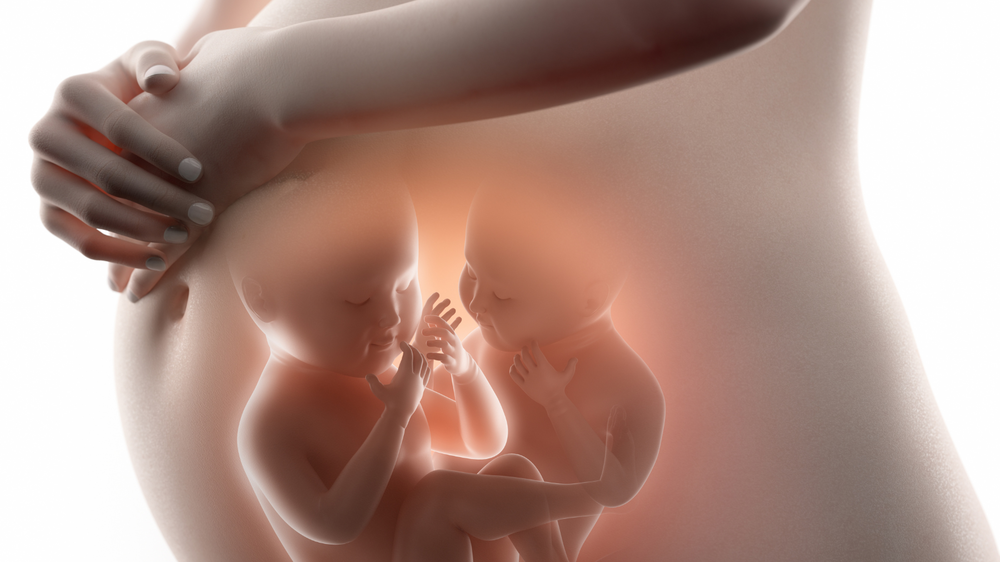
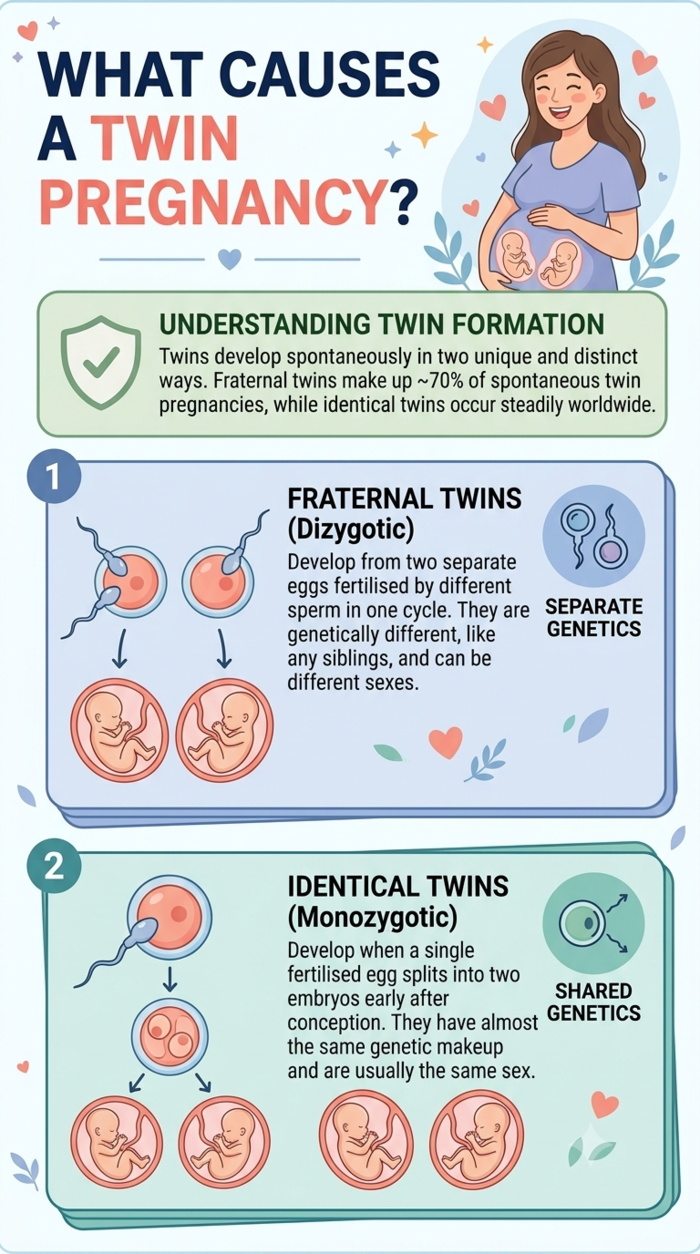
Twins form in two distinct ways:- Fraternal (dizygotic) twins: Develop when two separate eggs are released in one cycle, and each is fertilised by a different sperm cell. They have separate placentas and amniotic sacs, and are genetically no more alike than any other siblings and can be the same or different sexes.
- Identical (monozygotic) twins: Develop when a single fertilised egg splits into two embryos in the early days after conception. The two babies have almost the same genetic makeup and are usually the same sex. Most identical twin pregnancies are not linked to an inherited tendency, and the reason the embryo splits is generally unknown.
Do Twins Run in Families?
Twins run in families mainly through the mother's side. The tendency to hyperovulate (release more than one egg during a cycle) can be inherited, and researchers have linked gene variants affecting follicle-stimulating hormone (FSH) production to a higher chance of fraternal twins.Having a close relative, such as a sister, who has had fraternal twins is associated with a higher likelihood of having twins yourself. However, having no such family history does not mean you cannot conceive twins. The absence of twins among your relatives simply means you may not have that particular inherited risk factor.
A father cannot hyperovulate, but he can carry these gene variants silently and pass them to a daughter, who may then have twins herself. This is why twins sometimes appear to "skip a generation."
Identical twinning, in contrast, has not been shown to follow family lines in the same way and is considered a random occurrence during early embryo development.
"It is possible to conceive twins despite coming from a family without twins. There can be many reasons for twin pregnancies, and heredity is just one of them."
Dr Astha Gupta, Senior Consultant Infertility Expert, Obs & Gyn, Delhi IVF
What Else Increases the Chances of Having Twins?
Several factors outside genetics raise the likelihood of a twin pregnancy:- Maternal age: Women over 35 ovulate more erratically and release more than one egg more often, raising the chance of fraternal twins.
- Fertility treatment: IVF and ovulation-inducing medication are the leading causes of the rise in twin births worldwide, since they can stimulate the release of multiple eggs or involve transferring more than one embryo.
- Ethnicity: Twinning rates vary by population; they are higher in parts of Africa and lower in East Asia, with South Asian rates falling in between.
- Previous pregnancies: Women who have already had one or more children have a slightly higher chance of a twin pregnancy in a later one.
Is a Twin Pregnancy Considered High-Risk?
A twin pregnancy is classified as high-risk because of the added strain of carrying two babies.Common complications include:
- Preterm birth
- Low birth weight
- Gestational diabetes
- Pregnancy-induced hypertension
Having twins without a family history is common, since age, fertility treatment, and chance influence a multiple pregnancy as much as genetics does.
Whether you’re pregnant, a new mom, or navigating postpartum, you don’t have to do it alone. Join our support group to connect, share, and support one another.
FAQs on Can You Have Twins Without a Family History?
- Are twins more likely if my mother or sister had twins?
Yes, particularly if they had fraternal twins. An inherited tendency to release more than one egg can increase the chance of fraternal twins. - Can a twin pregnancy happen without any fertility treatment?
Yes. Spontaneous twin pregnancies occur naturally through hyperovulation or the random splitting of a fertilised egg, without any fertility medication or IVF involved. - Can I have twins if twins do not run in my family?
Yes. A family history is not required for a twin pregnancy. Identical twins usually occur without an inherited family tendency, and fraternal twins can also occur without a family history.