In this article:
The association becomes different over the longer term. Having a full-term pregnancy is generally associated with a lower lifetime risk of breast cancer compared with never having been pregnant. Dr Seema Sharma notes that this protective association becomes more apparent as more time passes after pregnancy.
How Does Pregnancy Change Breast Cancer Risk Over Time?
The association between pregnancy and breast cancer risk differs between the period immediately after childbirth and the subsequent years.| Time after pregnancy | Breast cancer risk |
| Immediately after childbirth | Risk may temporarily increase |
| Subsequent years | The temporary increase gradually declines |
| Long term after a full-term pregnancy | Risk is generally lower than in women who have never been pregnant |
This does not mean that pregnancy causes breast cancer. Pregnancy can influence breast tissue in ways that affect breast cancer risk during different periods following childbirth.
The longer-term association is different. Women who have had a full-term pregnancy generally have a lower lifetime risk of breast cancer than women who have never been pregnant.
Does the Age at First Pregnancy Matter?
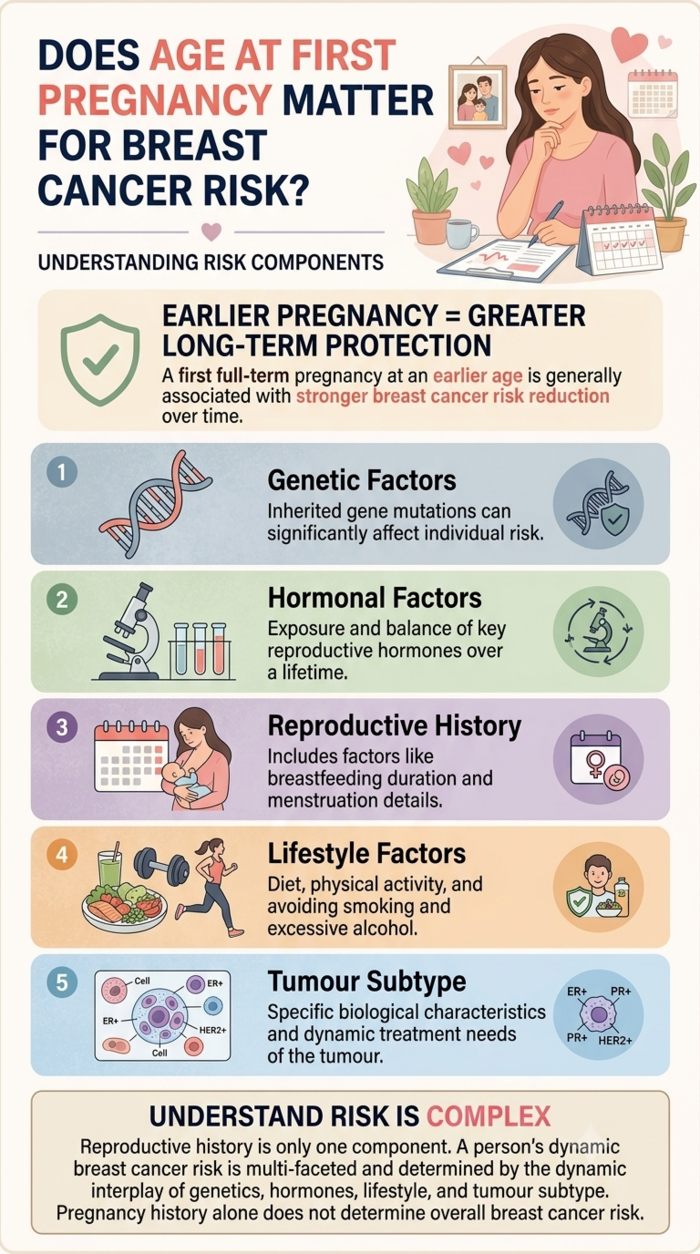
The age at which a woman has her first full-term pregnancy is also relevant to long-term breast cancer risk. According to Dr Seema Sharma, an earlier first full-term pregnancy is generally associated with greater long-term protection compared with having a first full-term pregnancy at a later age.However, reproductive history is only one component of breast cancer risk. Individual risk can also be influenced by:
- Genetic factors
- Hormonal factors
- Reproductive history
- Lifestyle factors
- Breast cancer tumour subtype
Does Pregnancy Protect Against All Types of Breast Cancer?
Pregnancy does not provide the same degree of protection against every type of breast cancer.Dr Seema Sharma explains that the association between pregnancy and breast cancer risk can vary according to the tumour subtype, reproductive history and other individual factors.
Breast cancer can also develop after pregnancy, although it remains uncommon. Therefore, pregnancy should not be considered a guarantee against breast cancer.
A new or persistent breast change should not automatically be attributed to pregnancy or breastfeeding. Particular attention should be given to:
- A new or persistent breast lump
- A change in the nipple
- Unusual nipple discharge
- A change in the skin of the breast
Dr Seema Sharma emphasises that awareness of your usual breast changes can help you recognise when something feels different. This can support timely evaluation of persistent or concerning symptoms.
Concluding our discussion, Dr Seema Sharma explains that pregnancy is neither simply “protective” nor “harmful” in relation to breast cancer. Its effect changes over time, while an individual’s overall risk depends on multiple reproductive, genetic, hormonal and lifestyle factors.
Pregnancy has a time-dependent relationship with breast cancer risk. Its influence represents one component of an individual's overall breast cancer risk, alongside genetic, hormonal, reproductive and lifestyle factors.
Whether you’re pregnant, a new mom, or navigating postpartum, you don’t have to do it alone. Join our support group to connect, share, and support one another.
FAQs on Does Pregnancy Affect the Risk of Breast Cancer?
- Does having a baby reduce the risk of breast cancer?
Having a full-term pregnancy is generally associated with a lower long-term risk of breast cancer. However, breast cancer risk can temporarily increase during the years immediately following childbirth. - Does having your first baby at a younger age affect breast cancer risk?
Yes. An earlier first full-term pregnancy is generally associated with greater long-term protection compared with having the first full-term pregnancy at a later age. - Can breast cancer still develop after pregnancy?
Yes. Developing breast cancer after pregnancy is possible, although it remains uncommon. A new or persistent breast lump, nipple change, unusual discharge or skin change should not automatically be attributed to pregnancy or breastfeeding and should be appropriately evaluated.