In this article:
Understanding Chronic Kidney Disease During Pregnancy
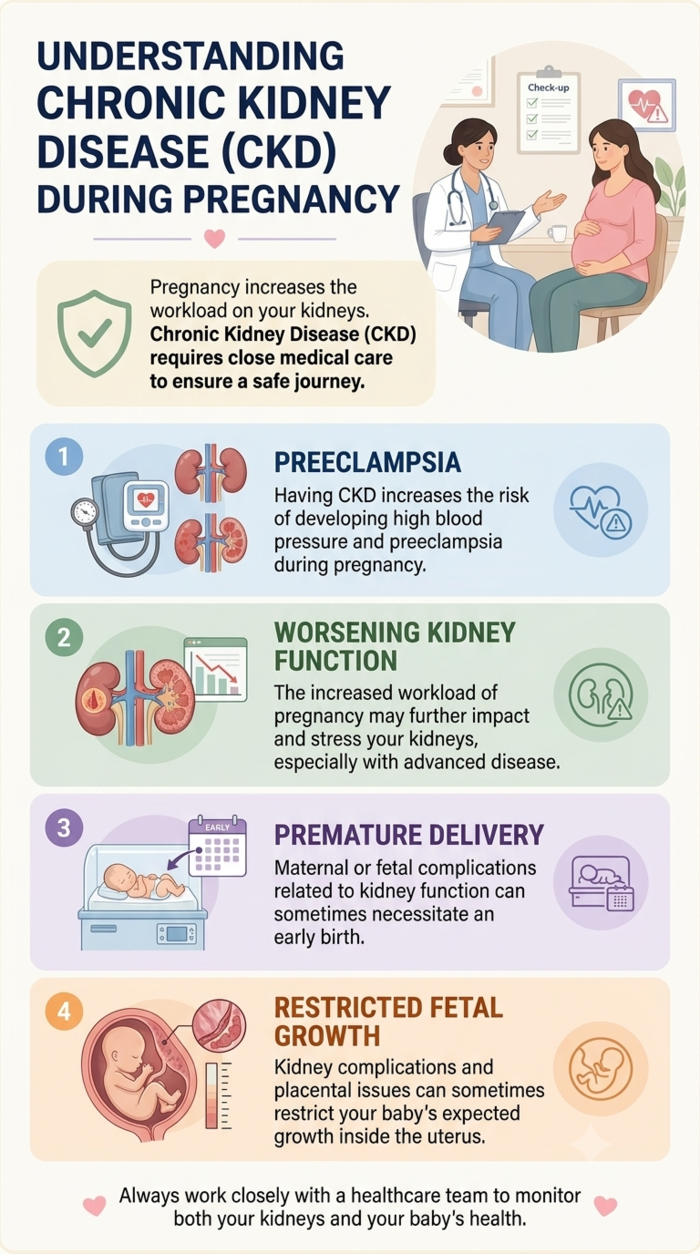
CKD affects the kidneys’ ability to filter waste products from the blood and regulate fluid balance. During pregnancy, changes in kidney function increase the workload on these organs. This may create additional challenges, particularly for women with reduced kidney function, high blood pressure, or significant protein loss in urine.The risk of complications depends on kidney function before pregnancy, the stage of CKD, and the presence of other medical conditions. Some possible complications include:
- Preeclampsia: Women with CKD have an increased risk of developing high blood pressure and preeclampsia during pregnancy
- Worsening kidney function: Pregnancy may further affect kidney function, particularly in women with advanced disease
- Premature delivery: Maternal or foetal complications may sometimes require early delivery
- Restricted foetal growth: Kidney-related complications and placental problems can affect the baby's growth inside the uterus
Individualised care, careful monitoring and appropriate treatment are essential to support maternal health and achieve the best possible pregnancy outcomes.
Planning Pregnancy Before Conception
Preconception counselling is important for women diagnosed with CKD. Ideally, they should consult a nephrologist and a maternal-foetal medicine specialist before trying to conceive.Dr Amritha Shetty may recommend the following:
- Assessing kidney function: Blood tests, particularly serum creatinine, help evaluate how well the kidneys are working
- Checking blood pressure: Existing hypertension should be controlled before conception
- Evaluating urinary protein: Measuring protein levels in urine helps doctors understand the extent of kidney involvement
- Reviewing medications: ACE inhibitors and angiotensin receptor blockers (ARBs) are generally unsuitable during pregnancy and may need to be replaced before conception under medical supervision
- Managing existing conditions: Diabetes, anaemia, and other health concerns should be addressed before pregnancy
Regular Monitoring Throughout Pregnancy
Women with CKD need constant supervision to monitor their well-being and detect issues as they arise. The regular monitoring process includes:- Monitoring of blood pressure levels: Frequent blood pressure monitoring helps in detecting hypertension and minimising the chances of complications.
- Kidney function tests:Serum creatinine level analysis assesses how efficiently kidneys are functioning. Even minor changes need medical attention, as the level of creatinine generally lowers during pregnancy
- Urinary protein tests: Doctors do regular urine analysis to check for protein in the urine, which determines the functioning of kidneys
- Monitoring the baby's growth: Ultrasound examinations help assess foetal growth, amniotic fluid levels, and overall development. Additional scans may be recommended if growth concerns arise.
Medication and Dietary Management
Medication adjustments are an important part of managing CKD during pregnancy. Certain medicines used before conception may need to be changed to protect the developing baby. Low-dose aspirin may be recommended for some women to reduce the risk of pre-eclampsia, under medical supervision.Dietary advice should be personalised according to the kidney function and nutritional requirements. Women should consider:
- Following a balanced diet with adequate calories and nutrients
- Avoiding unnecessary protein restrictions
- Maintaining appropriate fluid intake as advised by the doctor
- Limiting salt intake when recommended
- Taking prescription supplements such as iron and folic acid when required
Delivery and Postpartum Care
The timing and mode of delivery depend on kidney function, blood pressure, pregnancy progression, and the baby's condition. CKD alone does not automatically require a caesarean section. Vaginal delivery may be possible when there are no other obstetric indications.After childbirth, kidney function and blood pressure should continue to be monitored. Medication requirements may also change, particularly for women planning to breastfeed. Continued follow-up with the nephrologist is important for long-term kidney health.
Pregnancy with CKD requires careful planning, regular monitoring, and coordinated care from a nephrologist and gynaecologist. With the right support, many women can have successful pregnancies. Discuss pregnancy plans early, attend every antenatal appointment, follow prescribed medications, and monitor blood pressure and kidney function. Most importantly, never ignore unusual symptoms or delay seeking medical advice to protect both mother and baby.
FAQs on How to Manage Pregnancy With Chronic Kidney Disease
- Can chronic kidney disease affect fertility?
Yes, chronic kidney disease can affect fertility by disrupting the hormonal balance, menstrual cycles, and ovulation. Advanced kidney disease may also reduce sexual health and reproductive function. However, many women with CKD can conceive naturally. Early consultation with a nephrologist and fertility specialist can help assess reproductive health. - Is it safe to breastfeed with chronic kidney disease?
Yes, most women with chronic kidney disease can breastfeed, depending on their overall health and prescribed medication. Certain medicines used to manage kidney disease may not be suitable during breastfeeding. Therefore, mothers should discuss medication safety with their nephrologist before breastfeeding and avoid changing treatment independently. - Can chronic kidney disease increase the risk of miscarriage?
Yes, chronic kidney disease increases the risk of miscarriage, particularly in women with advanced kidney dysfunction, uncontrolled hypertension, or significant proteinuria. These complications may affect placental development and pregnancy health. Preconception counselling, appropriate treatment, and regular monitoring can help reduce complications and improve pregnancy outcomes.