

In this article:
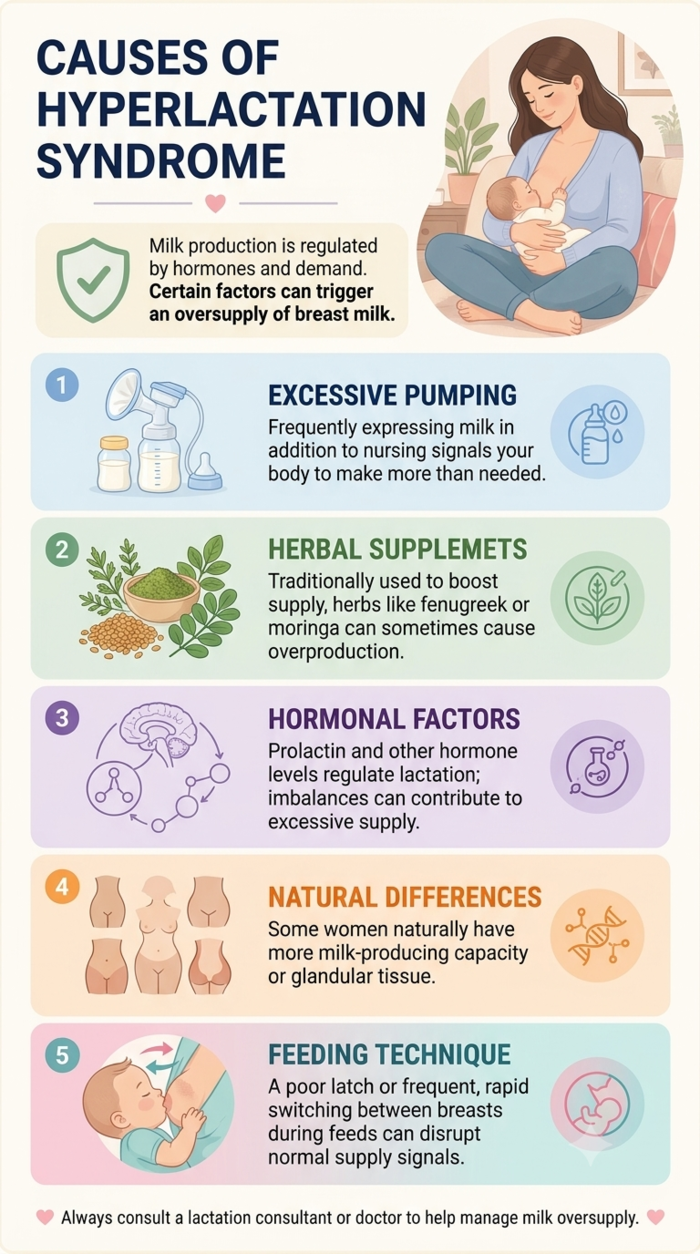
Causes of Hyperlactation Syndrome
Milk production is regulated by hormonal signals and the amount of milk removed from the breasts. Several factors can contribute to excessive production.- Excessive pumping: Expressing milk frequently in addition to breastfeeding can signal the breasts to produce more milk than the baby requires. This is common when mothers pump after every feed or maintain a large milk supply for storage.
- Herbal galactagogues: Certain foods, herbs, and supplements traditionally used to increase milk production may contribute to oversupply. These include fenugreek, moringa, and some herbal preparations. Their effects vary, and evidence supporting many galactagogues is limited.
- Hormonal factors: Hormones such as prolactin play an important role in milk production. However, high prolactin levels do not necessarily explain hyperlactation.
- Individual differences: Some women naturally produce more milk because of differences in breast glandular tissue and milk-producing capacity.
- Feeding technique: A poor latch or frequent switching between breasts.
Types of Hyperlactation
Healthcare professionals may classify hyperlactation into three types:- Self-induced: Excessive milk production caused by frequent pumping, galactagogues, or other practices that stimulate milk production.
- Iatrogenic: Oversupply resulting from medical advice or interventions, such as unnecessary pumping or medications that increase milk production.
- Idiopathic: Excessive milk production without an identifiable cause.
Signs of Hyperlactation
Symptoms appear in both mother and baby.Symptoms in mothers include:
- Breasts that remain unusually full or uncomfortable after feeding.
- Frequent milk leakage between feeds.
- Painful or forceful milk let-down.
- Sore nipples due to the baby struggling to latch or control milk flow.
- Recurrent plugged milk ducts.
- Repeated episodes of mastitis (breast inflammation).
- Coughing, choking, or spluttering during breastfeeding.
- Pulling away from the breast when milk starts flowing.
- Difficulty maintaining a deep latch.
- Frequent gas, abdominal discomfort, or excessive spit-up.
- Green, frothy, or explosive stools.
- Fussiness or breast refusal during feeding.
Hyperlactation tends to make breastfeeding challenging despite having enough milk supply. Remember, timely guidance can help mothers manage oversupply, prevent complications, and make breastfeeding more comfortable.
Management of Hyperlactation Syndrome
Treatment aims to reduce excessive milk production gradually without compromising the baby's nutrition or causing breast complications.- Adjust breastfeeding positions: A laid-back breastfeeding position, in which the mother reclines slightly while the baby lies against her body, can help slow milk flow. Side-lying and upright breastfeeding positions may also help some babies manage a forceful let-down.
- Avoid unnecessary pumping: Mothers should avoid pumping after every feed unless medically advised. If you need to express milk because of work commitments or separation from the baby, express only what the baby needs rather than encouraging extra production.
- Try supervised block feeding: Block feeding involves offering the same breast for a specific period before switching to the other breast. This allows milk to accumulate in the unused breast, signalling the body to gradually reduce production. However, block feeding should only be attempted under the guidance of a lactation consultant. Unsupervised block feeding can cause plugged ducts, mastitis, or an excessive drop in milk supply.
- Express a small amount of milk before feeding: If the milk flow is too forceful, expressing a small amount by hand before attaching the baby may help reduce the initial pressure. Avoid completely emptying the breast, as this can stimulate further milk production.
- Review milk-boosting supplements: Mothers experiencing oversupply should discuss their use of fenugreek, moringa, and other galactagogues with their healthcare provider. Unnecessary milk-boosting supplements should be avoided.
FAQs on Hyperlactation Syndrome: Causes, Symptoms, and Treatment
- How do I know if I have an oversupply of breast milk?
Breasts stay full after feeds, milk leaks or sprays, and the baby gulps, coughs, or pulls away. A lactation consultant can confirm it. - Can too much breast milk harm my baby?
Most babies cope. Fast flow can cause choking, fussiness, digestive symptoms, and feeding refusal. Mothers face blocked ducts and mastitis. - How long does oversupply last?
Supply usually adjusts to the baby's needs over time. With block feeding, a change is often seen within a few days.