In this article:
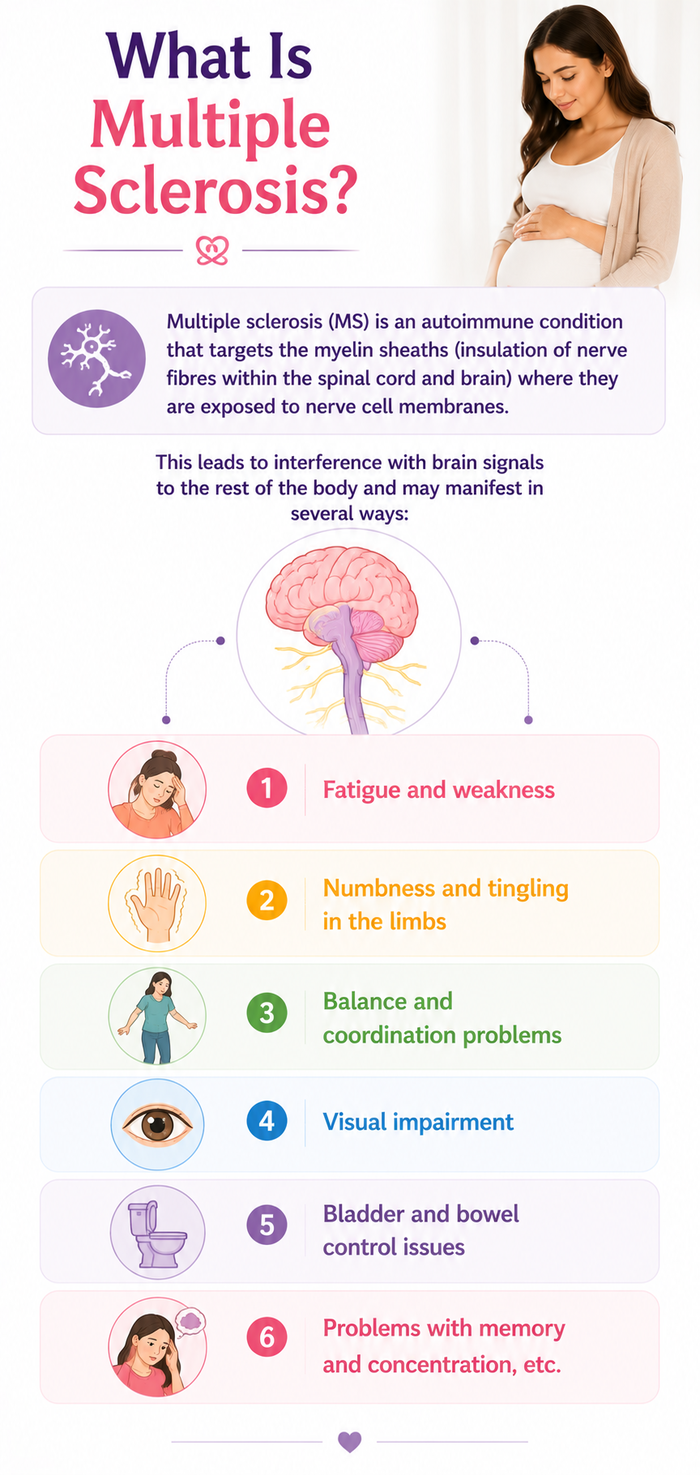
What Is Multiple Sclerosis?
Multiple sclerosis (MS) is an autoimmune condition that targets the myelin sheaths (insulation of nerve fibres within the spinal cord and brain) where they are exposed to nerve cell membranes. This leads to interference with brain signals to the rest of the body and may manifest in several ways:
- Fatigue and weakness
- Numbness and tingling in the limbs
- Balance and coordination problems
- Visual impairment
- Bladder and bowel control issues
- Problems with memory and concentration, etc
How Does Pregnancy Impact MS?
Pregnancy impacts MS in the following ways:
During Pregnancy: A shift in a woman's immune system occurs when she is pregnant, naturally providing immunity against foetal rejection and leading to a reduction in MS relapses, especially during the second and third trimesters. Many women experience a significant improvement in their symptoms while pregnant. Relapses are reduced by up to 70 % during the third trimester. Symptoms become stable or even improve from the second trimester onward.
Postpartum Period: This period is the toughest part of the cycle, with an increase in MS relapses beginning between three and six months postpartum and often continuing up to a year. This needs to be managed well.
Will MS Impact the Baby?
There is no evidence that MS has an impact on the baby directly, i.e., no findings show it crosses the placenta and pregnancy outcomes in women with MS generally have no worse results than those for normal women in relation to development, birth weight or delivery complications (as long as MS therapies are correctly administered).
Preparing for Pregnancy With MS
It is critical to undergo proper preconception planning. Before attempting to conceive, an appointment should be scheduled with your neurologist and obstetrician. Issues to discuss:
- Current medications
- Current MS status
- Postpartum
- Folic acid
- Vitamin D status
- Physiotherapy
Coping With MS Throughout All Three Trimesters of Your Pregnancy
First Trimester: During this time, you should stop taking almost all MS medications, and your neurologist will monitor for any disease activity. Fatigue can be overwhelming, so make rest a priority and avoid pushing yourself. Eat small, frequent meals. As overheating is a common MS trigger and can worsen symptoms temporarily, try to avoid it.
Second Trimester: It is in these trimesters that most women see a decrease in the rate of relapses; for many, it can be a far more stable trimester than the first. Continue with regular neurological appointments, and if you feel able, continue light exercise, which will benefit your MS and pregnancy.
Third Trimester: Relapses usually become at their lowest during the third trimester, which is the most neurologically stable time in pregnancy. Increased physical discomfort, in conjunction with poor balance, will require adaptations at home and in your workplace.
Giving Birth With MS
During Delivery: MS does not forbid vaginal birth; it depends on obstetric factors. You can have an epidural for your labour as this is proven to be safe and does not worsen MS. If you are finding your labour fatiguing, you should discuss pain management with your medical team before giving birth. If overheating is something you find yourself susceptible to during labour, it is important to take temperature into account when thinking about pain relief and positioning. Lower limb weakness or spasticity can also influence labour management, and your obstetrician and neurologist will manage this accordingly.
Postpartum Period: The months after childbirth carry the highest risk of MS relapse, and you need to prepare for this before the birth. Taking your MS medication again as soon as possible after delivery greatly reduces the chance of postpartum relapse; discuss this with your neurologist before giving birth. Breastfeeding and MS medication can be tricky; some medications are not suitable, and your neurologist will need to weigh the benefits of breastfeeding against the risk for you.
Monitoring MS During Pregnancy and the Postpartum Period
It is important to seek immediate medical help if:
- New or worsened MS symptoms such as changes in sight, numbness, problems with balance or coordination.
- Your fatigue suddenly becomes unbearable, and not just normal pregnancy tiredness.
- Problems with bladder or bowel control sudden.
- Your mood drops significantly, and you withdraw from activities and cannot bond with your baby.
- You feel you have new symptoms that need investigating.
Contact Your Doctor Immediately If
Any MS symptoms that emerge while you are pregnant.
- You are unsure about the safety of a medication that you are taking, or wish to change it.
- You have a fever or infection, as infections can lead to temporary relapses.
- Your pregnancy is near, and you have not finalised a plan for managing your MS medication after delivery.
- You experience symptoms suggesting a relapse during the weeks following the birth of your baby.
The most thorough support network for you during your pregnancy will be made up of a combination of specialists, including your neurologist, obstetrician, potentially a physiotherapist and a mental health professional.
Pregnancy can be safely managed by those with MS. Planning for medication withdrawal before conception, having a team of specialists helping you through the entire process, and careful preparation for a postpartum phase where the risk of relapse is at its highest are key. You can expect a healthy baby and a healthy pregnancy with the support you need from medical professionals.
Whether you’re pregnant, a new mom, or navigating postpartum, you don’t have to do it alone. Join our support group to connect, share, and support one another.
FAQs on How Does Multiple Sclerosis Affect Pregnancy and the Baby?
- Does MS get worse during pregnancy?
MS symptoms improve during the second and third trimesters because of the normal physiological changes within the immune system that protect the fetus. In the postpartum period, the relapse rate increases. - Can MS medications be taken during pregnancy?
The majority of MS disease-modifying therapies have not been assessed as being safe to take during pregnancy; therefore, they are stopped once it is detected and require the care of a neurologist to stop safely and manage the implications for relapses of MS when medication has stopped. - Will my child inherit multiple sclerosis?
Whilst MS has genetic influences, it is not inherited directly as disease development requires other triggers; therefore, the risk of a child of a mother with MS having MS is between 2 and 3 %.