In this article:
What Are the Active Compounds in Saffron and How Do They Work?
Saffron contains three primary active compounds: crocin, crocetin, and safranal. Each has distinct properties.
Crocin and crocetin: These are carotenoid pigments responsible for saffron's deep yellow-orange colour. Both have antioxidant properties, which help neutralise free radicals in the body.
Safranal: This gives saffron its distinctive aroma. It has mild sedative and mood-modulating properties and has been studied for its effect on anxiety and sleep quality, both relevant concerns during pregnancy.
In small amounts, these compounds act as dietary antioxidants with no known harmful effect on a healthy pregnancy. At concentrated doses, crocin and safranal have shown the ability to stimulate smooth muscle tissue, including uterine muscle, in laboratory and animal studies.
How Much Saffron Is Safe in Pregnancy?
The safe range for saffron during pregnancy is one to two strands per day, the amount typically used in a glass of saffron milk. At this quantity, saffron is a spice, not a supplement.
Clinical references note that doses up to 1.5g per day are considered safe, while doses of 5g or above carry the risk of uterine stimulation. Ayurvedic tradition and current dietary practice in India align with this range, a pinch stirred into a glass of warm milk.
Avoid saffron tablets, concentrated extracts, or herbal supplements that contain saffron alongside other botanicals. These can deliver doses far above what food use would provide and have not been adequately studied in pregnant women.
Can Saffron Cause a Miscarriage or Preterm Labour?
At culinary doses, there is no evidence that saffron causes miscarriage or triggers preterm labour in healthy pregnancies.The concern comes from pharmacological doses studied in animals, not from everyday food use. However, if you have a history of preterm labour, cervical incompetence, or placenta praevia, speak to your obstetrician before adding saffron regularly to your diet.
When Should You Avoid Saffron During Pregnancy?
Avoid saffron in the first trimester if your pregnancy is considered high-risk or if you have experienced bleeding or spotting. The first trimester is a period of organogenesis (rapid organ formation), and while there is no direct evidence linking culinary saffron to harm during this window, conservative use is reasonable.From the second trimester onwards, most practitioners consider saffron milk safe for healthy pregnancies. If you are on any medication, including iron supplements or anticoagulants, check with your doctor, as saffron has mild blood-thinning properties at higher doses.
Does Saffron Milk Have Any Benefits in Pregnancy?
Warm milk itself is a reliable source of calcium and protein, both important during pregnancy. The addition of saffron may offer mild antioxidant support.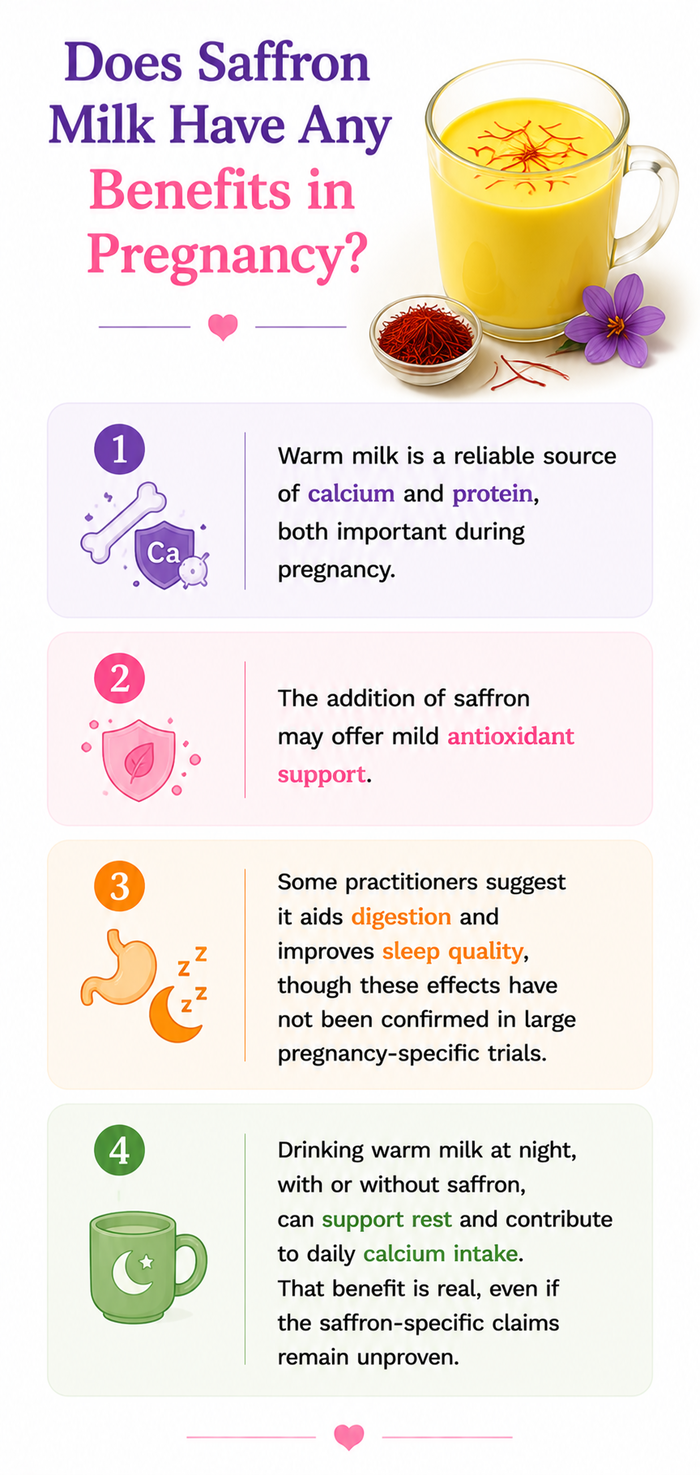
Some practitioners also suggest it aids digestion and improves sleep quality, though these effects have not been confirmed in large pregnancy-specific trials.
The ritual of drinking warm milk at night, with or without saffron, can support rest and contribute to daily calcium intake. That benefit is real, even if the saffron-specific claims remain unproven.
Does Saffron Milk Make Your Baby Fair? What Science Says
Saffron milk does not influence a baby's skin tone. Skin colour is determined entirely by genetics. Specifically, it depends on the amount and type of melanin produced by melanocytes, cells that inherit their activity level from genes passed down by both parents. No food, drink, or spice consumed during pregnancy can alter this genetic programme.
The belief that saffron milk produces a fair-skinned baby is deeply embedded in Indian culture and is passed down across generations, particularly by elders. It likely originated from saffron's golden colour and its long-standing association with health, auspiciousness, and beauty in Ayurvedic tradition. However, cultural longevity does not make a claim medically valid.
Saffron milk in small amounts is unlikely to harm a healthy pregnancy and can be part of a balanced pregnancy diet; the key is to keep it to a pinch a day and avoid concentrated forms.
Whether you’re pregnant, a new mom, or navigating postpartum, you don’t have to do it alone. Join our support group to connect, share, and support one another.
FAQs on Is Saffron Milk Safe During Pregnancy?
- Can I drink saffron milk every day during pregnancy?
Yes, one glass of saffron milk daily is generally considered safe from the second trimester onwards in healthy pregnancies. Use one to two strands per glass and avoid exceeding this amount. Women with a history of preterm labour, miscarriage, or any high-risk pregnancy condition should consult their obstetrician before making it a daily habit. - What is the best time to drink saffron milk during pregnancy, morning or night?
Both are suitable. Drinking saffron milk in the morning may support mood and digestion. At night, the mild sedative effect of safranal can promote relaxation and improve sleep quality, which is a common concern in the second and third trimesters.