
Dr Amritha Shetty, Consultant, Obstetrics & Gynaecology, MBBS, DGO, DNB (Obstetrics & Gynaecology), Birthright by Rainbow Children’s Hospital, explains its causes, potential complications, and management during pregnancy.
What is Sjögren's Syndrome?
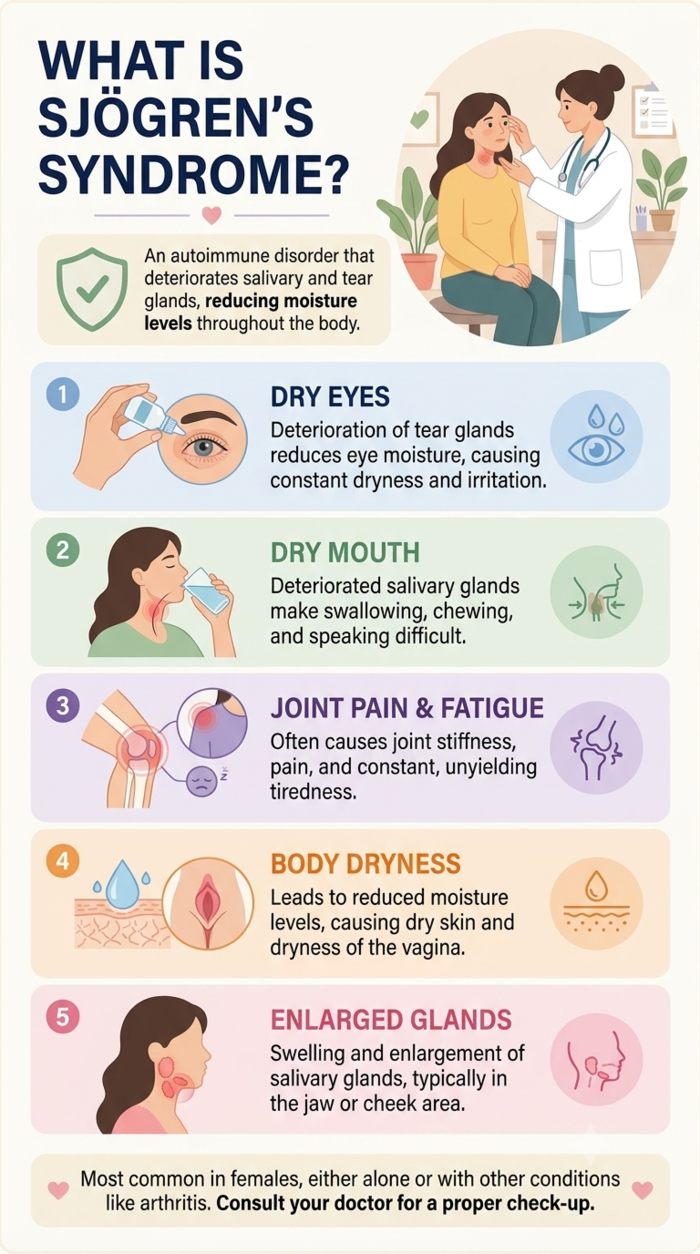
Sjögren's syndrome is an autoimmune disorder that causes deterioration of the glands that produce saliva and tears. This reduces moisture levels throughout the body.Some familiar symptoms include the following:
- Irritation in the eyes (dry eyes)
- Dryness of the mouth leading to difficulty in swallowing and speaking
- Stiffness of the joints and constant fatigue
- Dryness of the skin and vagina
- Enlarged salivary glands in some women
Can Sjögren's Syndrome Affect Pregnancy?
Many women with Sjögren's syndrome have a successful pregnancy. However, certain antibodies associated with the condition can cross the placenta and affect the developing baby.Two important antibodies are anti-Ro/SSA and anti-La/SSB, which are associated with a condition called neonatal lupus. This condition can affect the baby's skin, blood cells, liver, and rarely the heart.
One of the most serious complications is congenital heart block, a condition in which the electrical signals controlling the baby's heartbeat become disrupted. It can cause an abnormally slow heart rate and, in some cases, require lifelong medical care.
Dr Amritha Shetty highlights that although the risk of congenital heart block is relatively low, pregnancies involving these antibodies require appropriate assessment and monitoring.
Other possible pregnancy complications include the following:
- Increased risk of preterm delivery
- Foetal growth restriction in some pregnancies
- Increased risk of hypertensive disorders
- Neonatal lupus-related complications in newborns
With careful planning, appropriate medication and regular monitoring, women with Sjögren's syndrome can achieve healthy pregnancies and favourable outcomes.
Why Does Sjögren's Syndrome Develop?
The exact cause of Sjögren's syndrome is not fully understood. It develops when the immune system mistakenly attacks healthy tissues.However, several factors may contribute to its development:
- Genetic factors: Certain genetic characteristics may increase susceptibility to autoimmune conditions
- Immune system changes: Abnormal immune responses cause inflammation and damage to moisture-producing glands
- Hormone factors: Hormonal differences may partly explain why the condition is more common in women
- Environmental triggers: Certain infections and environmental factors may contribute to triggering the condition in genetically susceptible individuals
How is Sjögren's Syndrome Managed During Pregnancy?
Managing Sjögren's syndrome requires coordination between an obstetrician and a rheumatologist. The treatment plan depends on the disease activity, antibody status, previous pregnancy history, and the mother's overall health. Dr Amritha Shetty recommends individualised care and regular monitoring to identify potential complications early.Important management measures include:
- Antibody Screening
- Regular Foetal Heart Monitoring
- Medication Review
- Managing Dryness
- Monitoring Maternal Health
Living with Sjögren's syndrome during pregnancy requires careful planning, regular monitoring, and coordinated care. With appropriate medical guidance, many women can experience a healthy pregnancy and delivery. Consult your rheumatologist and obstetrician before conception or as soon as pregnancy is confirmed. Attend scheduled checkups, follow prescribed medications, and monitor symptoms closely. Early intervention and consistent care can help reduce complications and support the health of both mother and baby.
FAQs on Sjögren's Syndrome During Pregnancy: Causes and Management
- Does Sjögren's syndrome go away after pregnancy?
No, Sjögren's syndrome is a chronic autoimmune condition that does not disappear after pregnancy. Symptoms may remain stable, improve or worsen after childbirth. Regular postpartum follow-ups are important to monitor disease activity and adjust treatment when necessary. - Can Sjögren's syndrome affect breastfeeding?
Sjögren's syndrome does not automatically prevent breastfeeding. However, some women may experience reduced milk production due to glandular involvement. Certain medications may also require review. Consulting a doctor helps assess milk supply and identify safe treatment options during breastfeeding. - Is Sjögren's syndrome considered a high-risk pregnancy?
Pregnancy with Sjögren's syndrome may be considered high-risk, particularly when disease activity is high or specific antibodies are present. Potential complications include preterm birth and foetal heart block. Regular monitoring by a gynaecologist and a rheumatologist helps reduce risks and support healthy outcomes.