In this article:
What Causes Sleep Talking During Pregnancy?
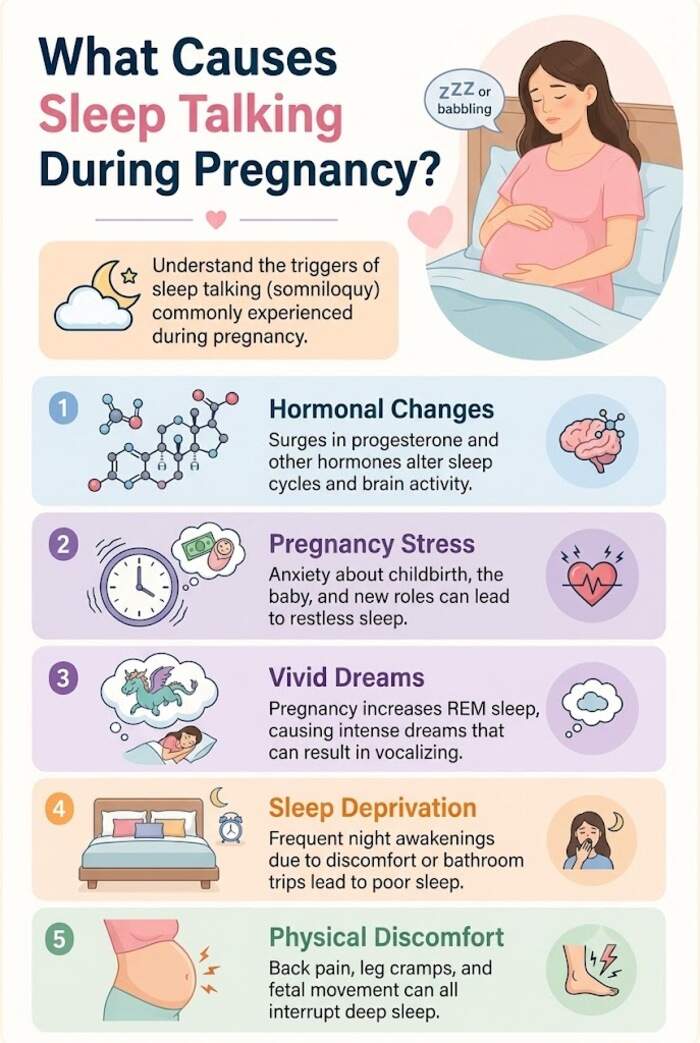
As stated by Dr Reddy, sleep talking is not so uncommon a phenomenon among pregnant women. Hormonal changes, emotional stress, sleep disturbances, and dreaming may all contribute to sleep talking.Lighter sleep, characterised by fragmentation, is common among pregnant women as the body adjusts to the physiological changes during pregnancy.
What Part Do Hormones and Emotions Have in All of This?
As Dr Reddy says, the hormones associated with pregnancy, like progesterone, affect sleeping patterns, and anxiety related to delivery, motherhood, or physical discomfort can cause increased brain activity during nighttime.If you consider all the aspects and factors your mind has to take into account during the whole pregnancy, from physical changes to emotions and becoming a parent in general, then it is only logical that all of this does not suddenly stop in the middle of the night. And sleep talking may be one of the manifestations of all the processes going on in your head.
In addition, vivid or weird dreams are very common phenomena for pregnant women, and many report having more vivid or numerous dreams compared to previous years. It is associated with the same hormonal changes and an increase in nocturnal awakenings due to a growing tummy and constant trips to the toilet.
How Can Sleep Talking Be Addressed?
"Improvement in sleep quality may help reduce sleep talking."Dr Swetha S Reddy, Consultant, Obstetrics and Gynaecology, SPARSH Hospital, Bengaluru
There are several simple things Dr Reddy suggests doing to achieve good quality of sleep when pregnant:
- Try to establish a consistent sleep schedule, going to bed and waking up at roughly the same time every day.
- Sleep on your left side with supporting pillows, as it is generally recommended.
- Avoid caffeine intake, especially later in the day, as it prevents falling asleep deeply.
- Do some relaxing exercises before bedtime, like stretching and deep breathing.
Can Sleep Talking be a Possible Sign of Other Conditions?
Though sleep talking itself does not constitute a serious problem, there are situations when the signs accompanying it should be considered. Obstructive sleep apnea is slightly more common in pregnant women because both weight and swelling affect airway passages, and the right way to handle this situation is to have an appropriate examination performed. That is the main difference that needs to be understood.When Should You Contact Your Doctor?
Here is a list of signs that could be a reason to inform your doctor about your sleep habits:- Sleep talking associated with snoring, gasps, or pauses in breathing
- Feeling tired during the day despite the feeling that you have slept enough
- Sleep talking occurring more often or becoming more disturbing
- A sleep issue interfering with your normal life
- Nighttime anxiety or racing thoughts that you find hard to cope with
Do keep in mind that sporadic sleep talking in pregnancy is quite normal for many women. It is important to focus on getting enough sleep and to address any ongoing sleep-related issues during your prenatal appointments. Good sleep hygiene not only ensures good health but also has positive effects on the development of your baby, so there is nothing to be embarrassed about occasional talking while sleeping, which your partner may bring up in the morning.
Whether you’re pregnant, a new mom, or navigating postpartum, you don’t have to do it alone. Join our support group to connect, share, and support one another.
FAQs on Talking in Your Sleep? What's Really Going On During Pregnancy?
- Is my sleep talking going to continue after giving birth to the baby?
Sleep talking will most likely disappear as hormone levels adjust and sleep becomes more normalised, though the extent to which this occurs may vary from woman to woman. - Is there anything my partner can do to assist me with sleep talking during pregnancy?
Your partner can wear earplugs, try changing the sleeping position for a while, or simply calm you down without waking you up. - Can I not have any recollection of my sleep talking in the morning?
It is quite normal, as sleep talking does not occur while dreaming but rather at lighter stages of sleep.