We got in touch with Dr Nandita Palshetkar, Scientific Director & Head of the Bloom IVF Unit at Lilavati Hospital, Mumbai, and Medical Director of Bloom IVF Centres, for expert insight on this condition.
What Is Uterine Inversion?
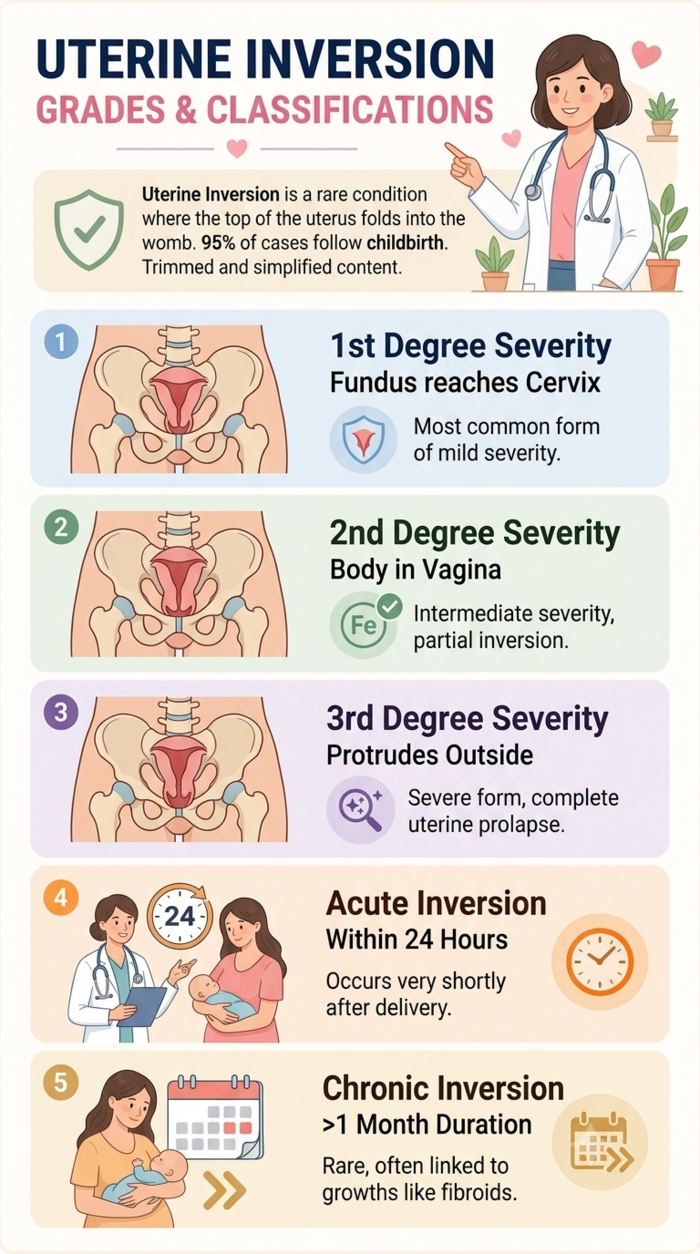
In uterine inversion, the top of the uterus (the fundus) folds downwards into the womb, through the cervix and, in severe cases, out of the vagina. About 95% of cases follow childbirth. The rest are linked to growths such as fibroids.It is graded into three types.
By severity:
- First degree: The fundus reaches the cervix.
- Second degree: The body of the uterus passes through the cervix into the vagina.
- Third degree: The uterus protrudes outside the vulva.
- Acute: Within 24 hours of delivery
- Subacute: 24 hours to 4 weeks
- Chronic: Beyond one month
What Causes an Inverted Uterus After Childbirth?
The exact cause is unclear. However, several factors may increase the risk, including:- Pulling the umbilical cord before the placenta has separated
- Excessive pressure on the uterus when it is relaxed and not contracting (uterine atony)
- A placenta attached at the top of the uterus or abnormally adherent to it
- Placenta accreta, where the placenta grows too deeply into the uterine wall
- A short umbilical cord
- Prolonged labour or a first delivery
- Uterine abnormalities or fibroids
- Previous uterine inversion
Uterine Inversion Symptoms: Warning Signs After Delivery
Symptoms appear soon after the baby is born:- Heavy bleeding (postpartum haemorrhage)
- Sudden, severe lower abdominal pain
- A dark red-blue fleshy mass in or outside the vagina
- A feeling of pressure or something coming down through the vagina
- Dizziness, pale skin, a fast pulse, and collapse
Uterine inversion is a potentially life-threatening obstetric emergency. Stabilising the mother while promptly repositioning the uterus to its normal anatomical position is the correct approach.
How Is Uterine Inversion Treated?
Treatment starts immediately, and treatment focuses on two priorities: stabilise the mother and return the uterus to its position.- Stabilisation: Intravenous fluids and blood transfusion treat shock and blood loss. Pain relief or anaesthesia is given.
- Manual replacement: The doctor pushes the fundus back through the cervix by hand. Medicines that relax the uterus may be given first.
- After replacement: The doctor gives oxytocin so the uterus contracts and does not invert again. A balloon placed inside the uterus can control bleeding.
- Surgery: If these steps fail, doctors may need to perform abdominal surgery. Hysterectomy is the last resort.
Can Uterine Inversion Be Prevented?
There is no way to prevent every case because some occur without an identifiable cause. However, careful management of the third stage of labour can reduce preventable risks.The placenta should be delivered using appropriate obstetric techniques rather than forceful traction on the umbilical cord. Proper uterine contraction and active management of the third stage of labour are important parts of preventing postpartum haemorrhage and related complications.
Uterine inversion is rare, but quick recognition, careful third-stage management, and delivery at a well-equipped facility improve the chance of full recovery.
Whether you’re pregnant, a new mom, or navigating postpartum, you don’t have to do it alone. Join our support group to connect, share, and support one another.
FAQs on Uterine Inversion During Delivery: A Rare but Serious Complication
- Can uterine inversion be fatal?
Yes. Without treatment, it can cause severe blood loss, shock, and can be life-threatening. - Can you get pregnant after uterine inversion?
Yes, if the uterus is preserved. Inform your doctor of the history so precautions can be planned. - Is uterine inversion the same as uterine prolapse?
No. In prolapse, weak pelvic support lets the uterus slip down into the vagina. In inversion, the uterus turns inside out, usually after delivery.