In this article:
Why Is Folic Acid So Important in Pregnancy?
Folic acid is a synthetic form of folate, a B vitamin (B9) your body needs for cell division and DNA synthesis. During the earliest weeks of pregnancy, it plays a direct role in the formation of the neural tube, the structure that develops into your baby's brain and spinal cord.The neural plate completes its closure early in pregnancy, usually between 26 and 28 days after fertilisation, often before a woman even knows she is pregnant. Taking 400 micrograms of folic acid daily can reduce the risk of neural tube defects by up to 50%.
In India, the national guidelines and Iron-Folic Acid (IFA) programme recommend that all pregnant women should take 60 mg of elemental iron and 400 mcg of folic acid daily, starting as early as possible at the first antenatal contact and continuing through delivery.
What Should You Do If You Miss a Folic Acid Dose?
If you forget to take a dose of folic acid, take it as soon as you remember and then take the next dose at the usual time. Do not take two doses to make up for a missed dose. If it is close to the time of your next tablet, skip the missed dose and carry on as normal.Folic acid is generally safe, and taking too much is unlikely to cause any harm on its own. However, if you are taking folic acid as part of a multivitamin, taking more than the recommended number of tablets can be dangerous.
When Does Missing Folic Acid Matter More?
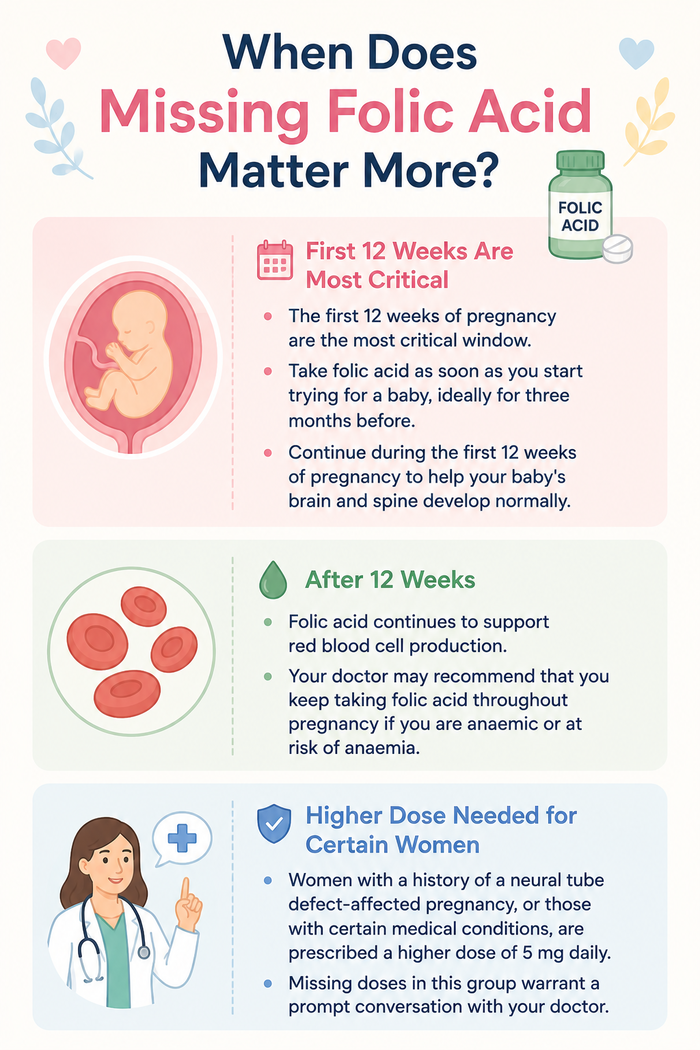
The first 12 weeks of pregnancy are the most critical window. It is recommended that you take folic acid as soon as you start trying for a baby, ideally for three months before and continue during the first 12 weeks of pregnancy, as this helps your baby's brain and spine develop normally.After 12 weeks, folic acid continues to support red blood cell production. Your doctor may recommend that you keep taking folic acid throughout pregnancy if you are anaemic or at risk of anaemia.
Women with a history of a neural tube defect-affected pregnancy, or those with certain medical conditions, are prescribed a higher dose of 5 mg daily. Missing doses in this group warrant a prompt conversation with your doctor.
Can Foods Help Boost Folate Levels?
Though food alone is not sufficient to meet the pregnancy requirements, Indian diets include several folate-rich ingredients that can complement your supplement.Good natural sources of folate in daily Indian cooking include:
| Food | Serving | Folate Content |
| Spinach | 1 cup cooked | ~130 mcg |
| Fenugreek leaves | 100g | ~140 mcg |
| Masoor dal | 1 bowl cooked | ~180 mcg |
| Chickpeas | 1 cup cooked | ~280 mcg |
| Kidney beans | 1 cup cooked | ~131 mcg |
| Moong dal | 100g cooked | 94–160 mcg |
| Guava | 1 medium (150g) | ~74 mcg |
| Oranges | 1 small fruit | ~29 mcg |
| Bananas | 1 medium fruit | ~24 mcg |
Practical Tips to Avoid Missing Doses
- Keep your folic acid tablet next to your toothbrush or beside your teacup, or wherever your morning routine starts
- Set a daily phone alarm with a label like "folic acid tablet”
- If you take your prenatal vitamins after a meal to reduce nausea, pick one consistent meal and stick to it
- Keep a small weekly pill organiser on your bedside table and fill it every Sunday; a missing tablet tells you at a glance if you forgot a dose
- If your partner or a family member takes a daily tablet at the same time, take yours together; a shared routine improves consistency
Whether you’re pregnant, a new mom, or navigating postpartum, you don’t have to do it alone. Join our support group to connect, share, and support one another.
FAQs on What Happens If You Miss a Folic Acid Tablet During Pregnancy?
- How long should I take folic acid during pregnancy?
The usual recommendation is to take 400 micrograms once a day while trying to conceive and during the first 12 weeks of pregnancy. Your doctor may recommend continuing throughout pregnancy, particularly if you are at risk of anaemia. - Can missing folic acid in the first trimester cause a miscarriage?
Missing one or a few folic acid tablets does not cause miscarriage. Folic acid deficiency is associated with an increased risk of neural tube defects, not pregnancy loss directly.