In this article:
What Is Cow Milk Protein Allergy in Babies?
Cow milk protein allergy (CMPA) is a reaction to proteins in cow’s milk. A baby can be exposed through formula, through breast milk when the mother eats dairy, or when milk-based foods are introduced during weaning.An Indian Journal of Pediatrics review (2024) estimates that 0.5% to 3% of infants have CMPA by one year of age.
There are two main types:
- IgE-mediated: Symptoms start within minutes, up to 2 hours, after milk. It can cause severe reactions.
- Non-IgE-mediated: Symptoms are delayed and mostly affect the gut. This type is more common.
What Are the Signs and Symptoms of Cow Milk Protein Allergy?
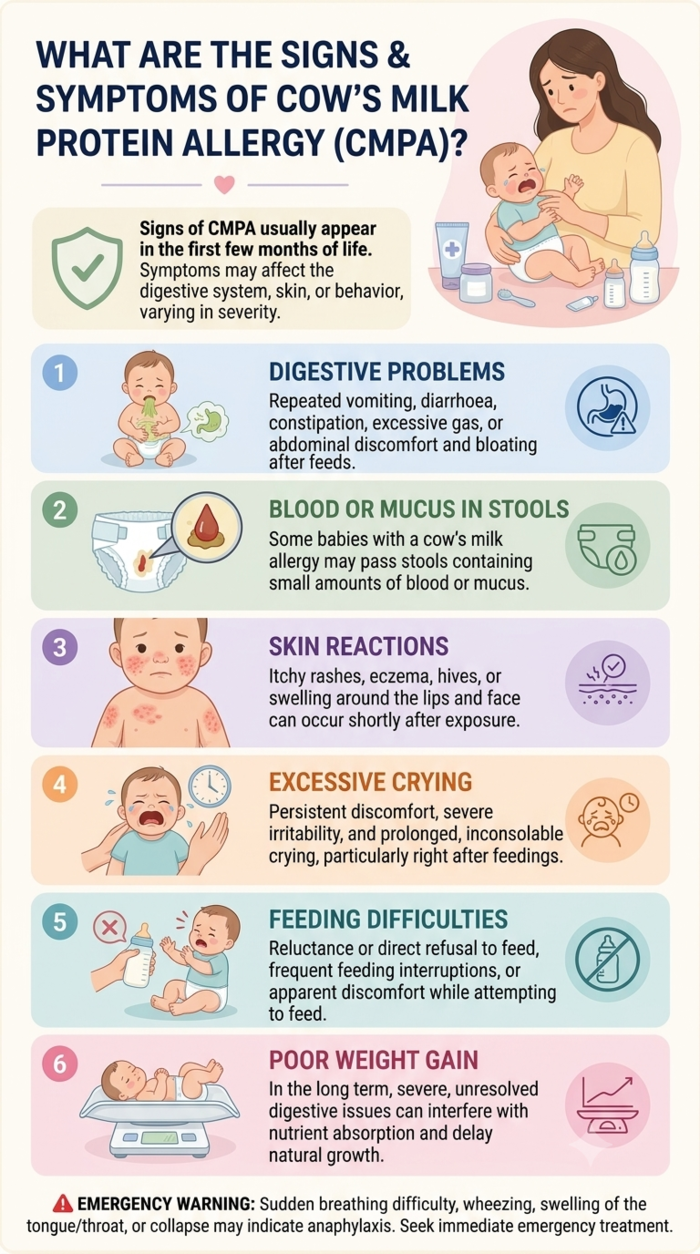
Symptoms vary depending on the type of allergic reaction and the baby's age. They may affect the digestive system, skin, and respiratory tract.Common signs include:
- Digestive problems: Repeated vomiting, diarrhoea, constipation, excessive gas, and abdominal discomfort.
- Blood or mucus in stools: Some babies may pass stools containing small amounts of blood or mucus.
- Skin reactions: Eczema, itchy rashes, hives, or swelling around the lips and face.
- Excessive crying: Persistent discomfort, irritability, and prolonged crying, particularly after feeds.
- Feeding difficulties: Refusal to feed, frequent feeding interruptions, or discomfort during feeding.
- Poor weight gain: Persistent digestive symptoms may interfere with feeding and nutrient absorption, affecting growth.
Parents should never change formulas repeatedly without consulting a paediatrician. Most children gradually develop tolerance to cow's milk protein as they grow older. Regular medical follow-ups are important to monitor growth, nutritional status, and the possibility of safely reintroducing milk into the diet.
How Is Cow Milk Protein Allergy Managed in Infants?
Management of cow milk protein allergy in infants involves strict avoidance of milk protein, a suitable feeding choice, and regular growth monitoring.- Continue breastfeeding: If a breastfed baby has confirmed or strongly suspected CMPA, the doctor may recommend that the mother eliminate cow's milk and dairy products from her diet for two to four weeks. Mothers should check packaged food labels for ingredients such as casein and whey.
- Choose an appropriate formula: For babies who are formula-fed or need supplementation, the paediatrician may recommend:
- Extensively hydrolysed formula (EHF): Contains cow milk proteins broken down into smaller fragments, making them less likely to trigger an allergic reaction. It is generally the first choice for mild-to-moderate CMPA.
- Amino acid-based formula (AAF): Contains proteins in their simplest building blocks, amino acids. It may be recommended for severe allergies or when a baby does not respond to extensively hydrolysed formula.
- Hydrolysed rice formula: May be considered an alternative where an appropriate product is available.
- Introduce solid foods carefully: Complementary feeding should generally begin around six months, as recommended for other infants. However, foods containing cow's milk proteins should be avoided until the doctor confirms that the baby can tolerate them. Introduce other age-appropriate foods one at a time, while maintaining a balanced diet. Do not unnecessarily delay introducing other common allergens unless advised by the paediatrician.
- Monitor growth and nutrition: Babies with CMPA need regular monitoring of their weight, length, and overall development. Avoiding dairy without suitable nutritional alternatives can lead to inadequate calcium, vitamin D, protein, and energy intake.
FAQs on Cow Milk Protein Allergy in Infants: Signs and Management
- Is cow milk allergy the same as lactose intolerance?
No. An allergy is an immune reaction to milk protein. Lactose intolerance is difficulty digesting milk sugar, and it is uncommon in babies. - Which formula is used for cow's milk protein allergy?
Extensively hydrolysed formula is the first choice. Amino acid formula is used for severe cases or when hydrolysed formula fails. - At what age do babies outgrow cow's milk allergy?
Most outgrow it in early childhood, often by 3 to 5 years. A small number continue to react into later childhood or adulthood.