In this article:
What Is Patau Syndrome?
Patau syndrome occurs when a baby has three copies of chromosome 13 instead of two, in all or some cells. It affects roughly 1 in 5,000 to 1 in 16,000 births. Most cases are not inherited.The extra chromosome usually appears by chance when the egg or sperm forms. The chance rises with the mother’s age.
More than 95% of pregnancies with trisomy 13 end in miscarriage. Babies with mosaic or partial trisomy 13, where only some cells carry the extra chromosome, often have milder features.
What Causes Patau Syndrome?
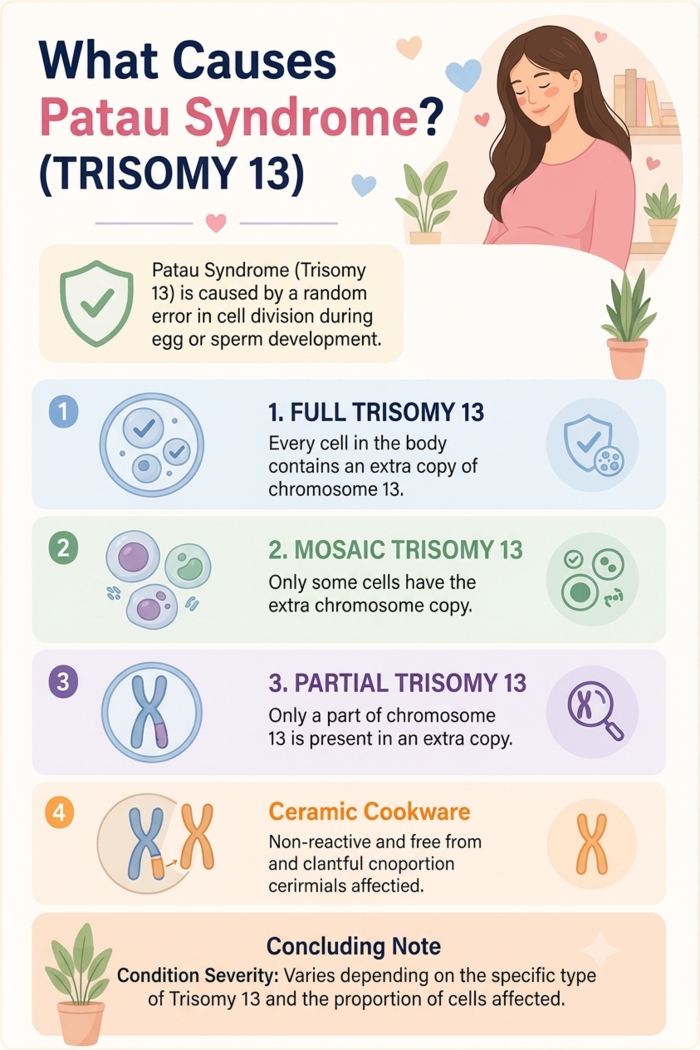
The condition results from a random error in cell division during egg or sperm development.Different forms are:
- Full trisomy 13: Every cell has an extra copy of chromosome 13.
- Mosaic trisomy 13: Only some cells have the extra chromosome.
- Partial trisomy 13: Only a part of chromosome 13 is present in an extra copy.
How Is Patau Syndrome Detected During Pregnancy?
Detection has two steps: screening, which estimates the chance, and a diagnostic test, which confirms it.| Test | When | What it shows |
| Dual marker test with NT scan | 11–14 weeks | Chance of trisomy 13, 18 and 21, calculated from blood hormones (free β-hCG, PAPP-A), maternal age and neck-fold thickness |
| NIPT | From 10 weeks | Chance based on foetal DNA in the mother's blood |
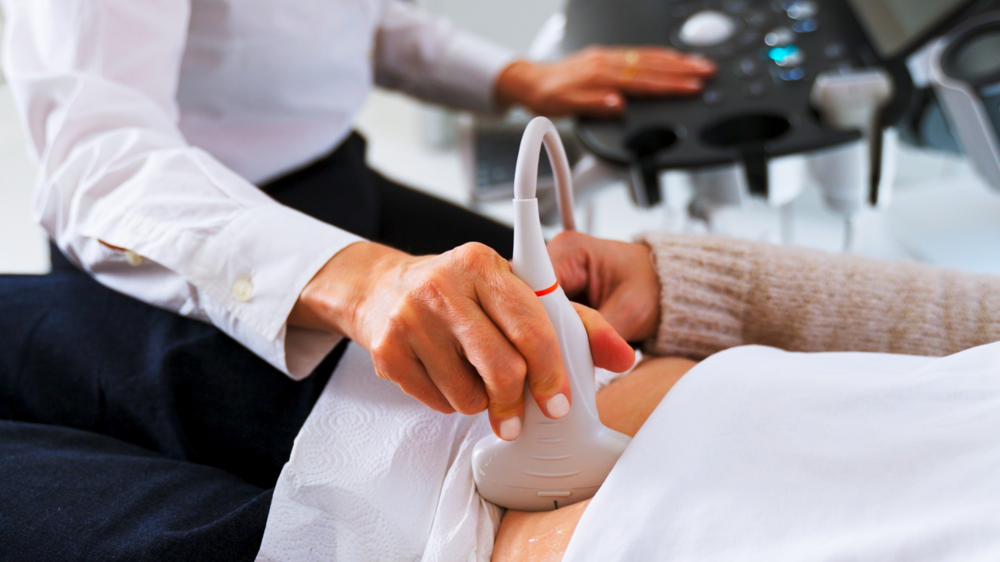
| Anomaly scan | About 18–22 weeks | Physical features linked to trisomy 13 |
| CVS | 10–13 weeks | Confirms or rules out the diagnosis |
| Amniocentesis | 15–20 weeks | Confirms or rules out the diagnosis |
Although outcomes are often serious, individual circumstances differ. Early diagnosis helps families access accurate information and make informed decisions. Emotional support, clear communication, and compassionate, non-judgmental counselling are essential throughout the process.
Ultrasound Signs of Patau Syndrome
A detailed ultrasound may reveal abnormalities in different parts of the baby's body, including:- Brain: Incomplete development or separation of the brain's two halves.
- Face: Cleft lip, cleft palate, or unusually small eyes.
- Heart: Congenital heart defects.
- Limbs: Extra fingers or toes (polydactyly).
- Abdomen: Abdominal wall defects, in which some organs develop outside the abdominal cavity.
- Kidneys: Structural abnormalities or cysts.
Patau Syndrome Testing in India: Cost, Documents and the Law
- Who is advised NIPT: Women of advanced maternal age, those with a high-chance dual marker result, abnormal ultrasound findings, or a previous affected pregnancy.
- Cost: Major Indian lab chains list NIPT at about ₹16,000–17,000 across metro cities. Prices vary by lab and city.
- Documents: A signed NIPT request and consent form with the doctor's stamp, the ultrasound report, dual or quadruple marker reports, and photo ID.
- Foetal sex: Under the PC-PNDT Act 2003, NIPT reports do not disclose the sex of the baby.
- Termination law: The MTP (Amendment) Act 2021 sets gestational limits and approval steps. For substantial foetal abnormalities beyond 24 weeks, a Medical Board decides. A gynaecologist can explain how this applies to your pregnancy.
FAQs on Patau Syndrome: Can It Be Detected Before Birth?
- Is NIPT 100% accurate for Patau syndrome?
No. It is a screening test, and a high-risk result needs confirmation with CVS or amniocentesis. - What is the life expectancy of a baby with Patau syndrome?
About half of liveborn babies die within the first week, and around 1 in 10 live beyond the first year. Mosaic and partial forms usually have longer survival. - Is Patau syndrome hereditary?
Mostly not. The recurrence chance after full trisomy 13 is about 1%. It is higher when a parent carries a balanced translocation.