In this article:
How Does Alcohol Affect Fertility in Men and Women?
Alcohol consumption can affect reproductive health in both partners. In women, regular alcohol intake may interfere with hormonal balance, ovarian function, and egg development. It can also increase oxidative stress, which may damage cells.In men, excessive alcohol consumption may affect testosterone levels, sperm production, sperm count and sperm movement (motility). Since sperm development takes approximately three months, lifestyle habits during this period can influence sperm quality.
Couples planning pregnancy should avoid alcohol. Beer, wine, and spirits all contain alcohol, and choosing one type over another does not eliminate the potential risks.
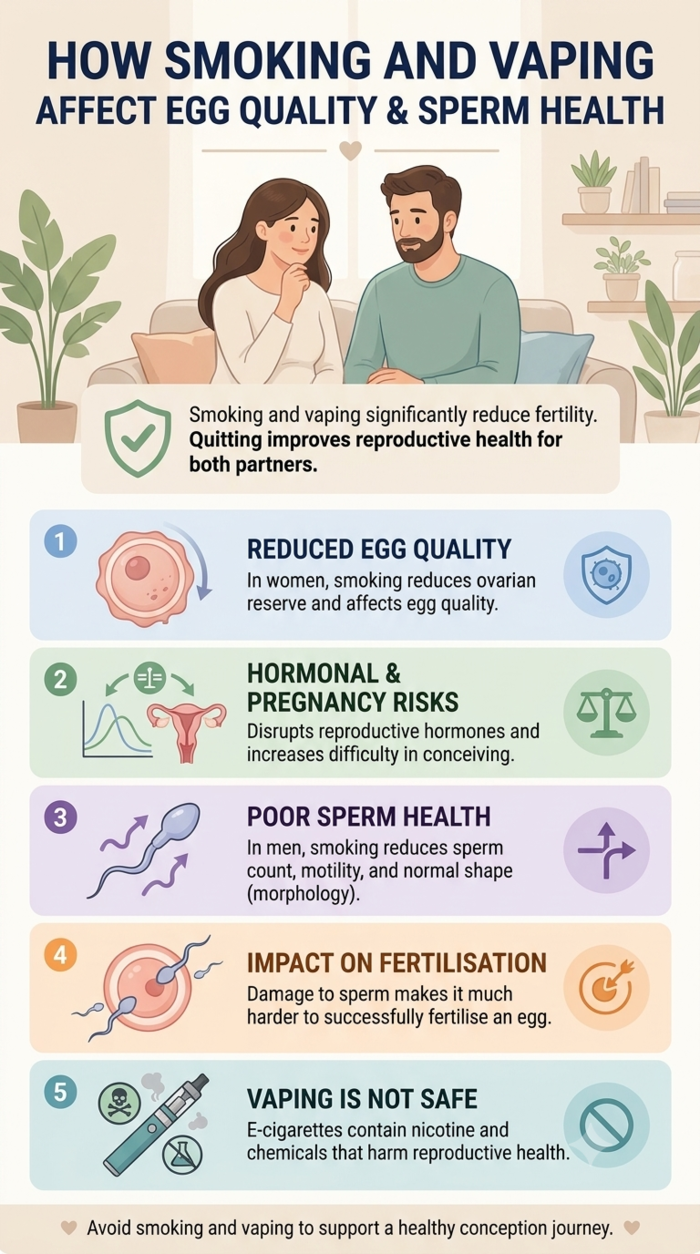
How Smoking and Vaping Affect Egg Quality and Sperm Health
Smoking is associated with reduced fertility in both men and women.In women, smoking may:
- Reduce ovarian reserve and affect egg quality.
- Affect reproductive hormones.
- Increase the risk of difficulty conceiving.
- Increase the risk of pregnancy complications.
Vaping should not be considered a safe alternative when planning pregnancy. E-cigarettes may contain nicotine and other chemicals that can affect reproductive health.
Can Stress Affect Fertility and Your Chances of Conception?
Chronic stress may influence fertility by affecting the body's hormonal and reproductive systems. When a person experiences prolonged stress, the body may remain in a heightened state of alertness, with changes in stress hormones such as cortisol.Stress can also interfere with sleep, menstrual regularity, sexual health and lifestyle habits, indirectly affecting the chances of conception.
How Do Poor Sleep and Night Shift Work Affect Fertility?
Working night shifts or following irregular sleep schedules can disrupt the body's circadian rhythm, which regulates the sleep-wake cycle and several hormonal processes. Long-term sleep disruption may also affect metabolic and reproductive health.In women: Hormones that control ovulation, such as luteinising hormone (LH) and follicle-stimulating hormone (FSH), follow a daily rhythm. Disrupted sleep can alter this pattern and may lead to irregular periods or delayed ovulation, which can make it harder to time conception.
In men: Much of the body’s testosterone is produced during sleep. Short or broken sleep is linked to lower testosterone levels and, in some studies, to reduced sperm count and quality.
People who work night shifts can consider the following measures:
- Maintain a consistent sleep schedule, even on non-working days.
- Create a dark, quiet, and comfortable sleeping environment.
- Avoid excessive caffeine to stay awake during shifts.
- Eat balanced meals instead of relying on frequent takeaway food.
- Include regular physical activity, yoga, or meditation.
- Take short walking breaks during work hours.
Is Caffeine Safe When Trying to Conceive or During Pregnancy?
Caffeine is found in coffee, tea, cola, energy drinks, and chocolate. Moderate caffeine intake is generally considered acceptable when trying to conceive. However, excessive consumption should be avoided.During pregnancy, women are advised to limit caffeine to 200 mg per day. The amount varies depending on the type of drink, serving size, and preparation method.
For example:
- A cup of instant coffee may contain approximately 100 mg of caffeine.
- A cup of black tea may contain around 75 mg.
- A can of cola may contain approximately 40 mg.
- Energy drinks can also contribute significantly to daily caffeine intake.
First of all, I would say is build muscle because that reduces your insulin resistance, that reduces the chronic inflammation of the body and better fertility outcomes is what we see people who exercise and keep a healthy lifestyle regularly. Second would be eliminating toxins like alcohol, smoke, cannabis, vaping, etc., which reduce the quality of the egg as well as the sperm.
4 Lifestyle Changes to Improve Fertility Before Pregnancy
Dr Chaudhary recommends four important lifestyle changes for couples planning pregnancy:1. Build muscle and exercise regularly: Include strength training and moderate physical activity in your routine. Exercise can support metabolic health, improve insulin sensitivity, and help maintain a healthy weight. Yoga can also be incorporated into a weekly routine.
2. Avoid harmful substances: Stop smoking, vaping, and recreational drug use. Avoid alcohol during pregnancy and minimise exposure to harmful substances while preparing for conception. Ideally, make these changes at least three to six months before trying to conceive.
3. Prioritise sleep: Aim for seven to nine hours of sleep every night. Maintain a regular sleep schedule and address persistent sleep difficulties.
4. Eat a balanced, fibre-rich diet: Include fruits, vegetables, whole grains, pulses, nuts and other fibre-rich foods. Traditional Indian meals containing dal, seasonal vegetables, whole grains and curd can help provide a variety of nutrients. A healthy gut supports overall health, although no specific food or diet is proven to guarantee better fertility.
Both partners should prioritise nutrition, exercise, sleep, and avoiding harmful substances well before conception to support their reproductive health and prepare for pregnancy.
FAQs on Can Smoking, Alcohol, and Poor Sleep Affect Your Chances of Getting Pregnant?
- Is one cup of coffee safe during pregnancy?
Generally, yes, provided total caffeine intake from all sources does not exceed 200 mg per day. - How long before trying to conceive should couples stop smoking and drinking?
Ideally, couples should start making healthier lifestyle changes three to six months before conception.