In this article:
How Much Water Should You Drink Daily While Breastfeeding?
According to the US National Academies of Sciences, Engineering, and Medicine, the recommended adequate intake for women during breastfeeding is approximately 3.8 litres of total water per day.| Source of water | Approximate amount per day |
| Drinking water and other beverages | 3.1 litres |
| Food (fruits, vegetables, soups and other meals) | 700 ml |
| Total | 3.8 litres |
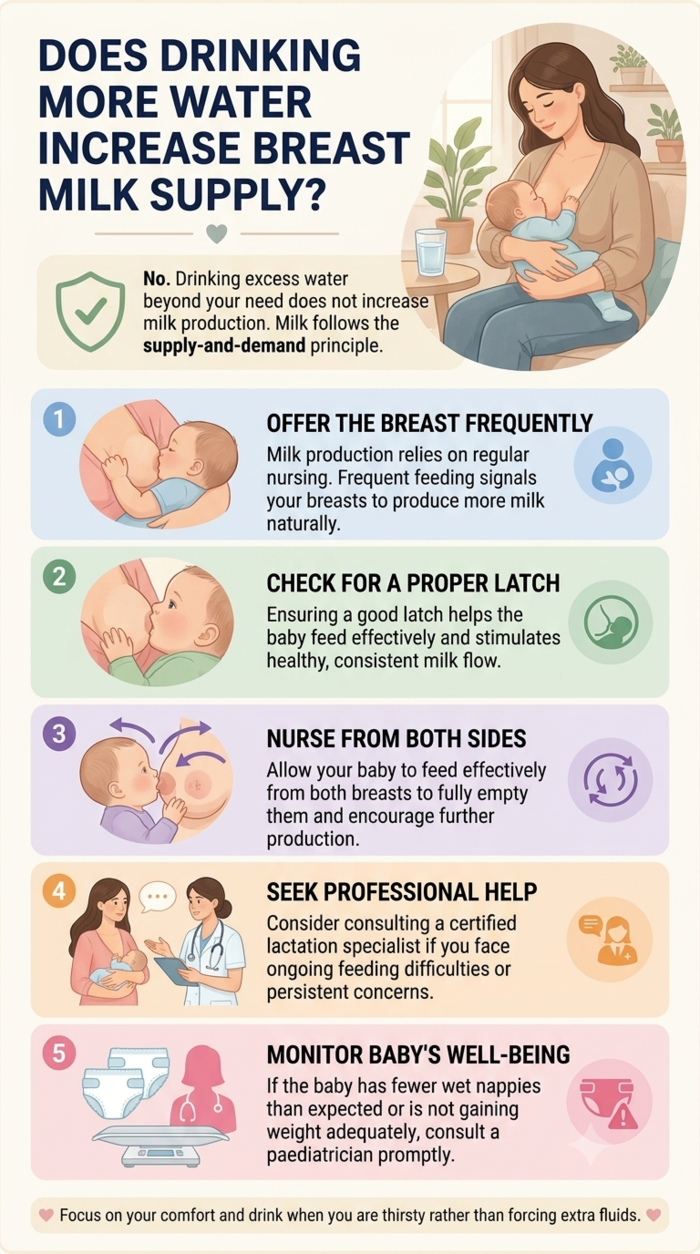
Does Drinking More Water Increase Breast Milk Supply?
No. Drinking more water than your body needs does not necessarily increase breast milk production.Milk production primarily follows the supply-and-demand principle. When a baby breastfeeds frequently and removes milk effectively, the breasts receive signals to produce more milk.
Although dehydration can affect maternal health, forcing yourself to drink several extra glasses of water is not an established way to increase milk supply.
If you are concerned about low milk production, consider:
- Offering the breast frequently.
- Checking whether your baby has a proper latch.
- Allowing the baby to feed effectively from both breasts.
- Seeking help from a lactation consultant if feeding difficulties continue.
Mothers should see to it that they listen to their bodies rather than force themselves to drink beyond their thirst. Ensure you stay hydrated and healthy.
Signs of Dehydration in Breastfeeding Mothers
Breastfeeding mothers should recognise the early signs of dehydration, particularly during hot weather or when managing frequent feeds.- Dark yellow, strong-smelling urine
- Passing urine less often
- Dry mouth or cracked lips
- Headache, tiredness, or dizziness
- Constipation
What Are the Best Drinks to Stay Hydrated While Breastfeeding?
Plain water is the easiest and most suitable choice for meeting your daily fluid needs. However, you can include other nutritious drinks as part of your fluid intake.- Coconut water, which supplies electrolytes
- Buttermilk and milk
- Jeera, saunf, lemon, or ajwain water
- Dal, soups, and broths
Can You Drink Tea or Coffee While Breastfeeding?
Yes, in limited amounts. Tea and coffee count towards your daily fluid intake, but caffeine passes into breast milk and may make some babies restless or keep them awake. The NHS advises no more than 200 mg of caffeine a day while breastfeeding, particularly when the baby is under 6 months old.| Drink (one mug) | Caffeine |
| Coffee | 90 mg |
| Tea | 55 mg |
| Green tea | 38 mg |
| Cola | 37 mg |
7 Practical Tips to Stay Hydrated During Breastfeeding
Maintaining hydration does not require complicated routines. A few simple habits can help:- Drink when you feel thirsty: Respond to thirst rather than forcing yourself to meet an exact hourly target.
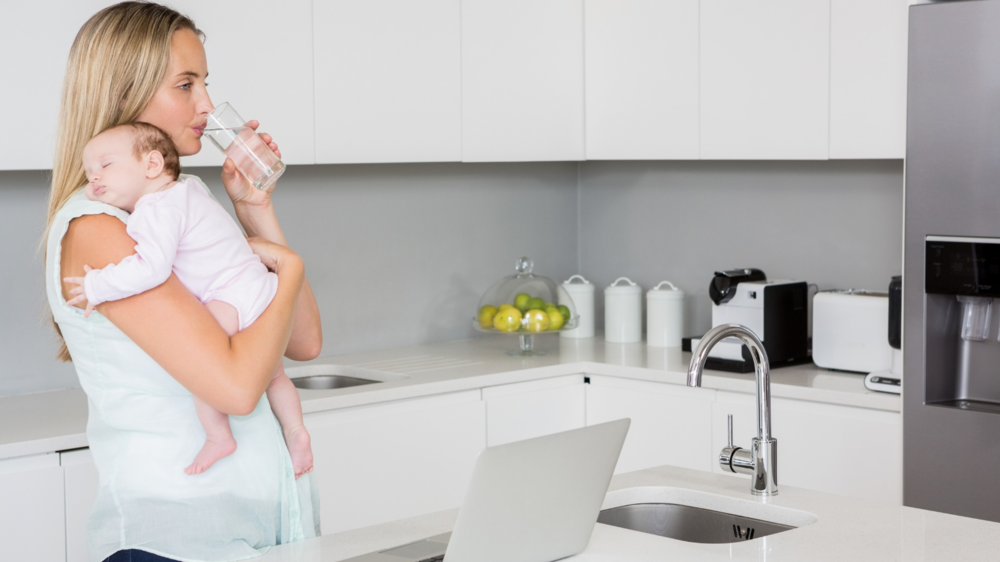
- Have water during feeds: Keep a glass or bottle within reach while breastfeeding.
- Include fluids with meals: Drink water with breakfast, lunch, and dinner.
- Eat water-rich foods: Include fruits, vegetables, soups, and curd in your daily diet.
- Increase fluids during hot weather: You may need more water if you sweat heavily, exercise, or spend time outdoors.
- Avoid replacing water with sugary drinks: Make plain water your main source of hydration.
FAQs on Water Intake While Breastfeeding: How Much Do You Need Each Day?
- How many glasses of water should a breastfeeding mother drink a day?
About 9 to 12 glasses of 250 ml of water, with the rest from food. Needs rise in hot weather and with exercise. - Does drinking water increase breast milk?
No proven effect. Milk supply depends mainly on how often milk is removed from the breast. - Should I drink water after every breastfeeding session?
You do not need to drink after every feed, but keeping water nearby and drinking whenever you feel thirsty can help maintain hydration.